The short version
A thin layer of ice can turn a dropped kerb into a wall and a trip to the pharmacy into house arrest. Councils have a legal duty to keep highways safe from snow and ice. Here's how to hold them to it, and claim the winter payments you're owed.
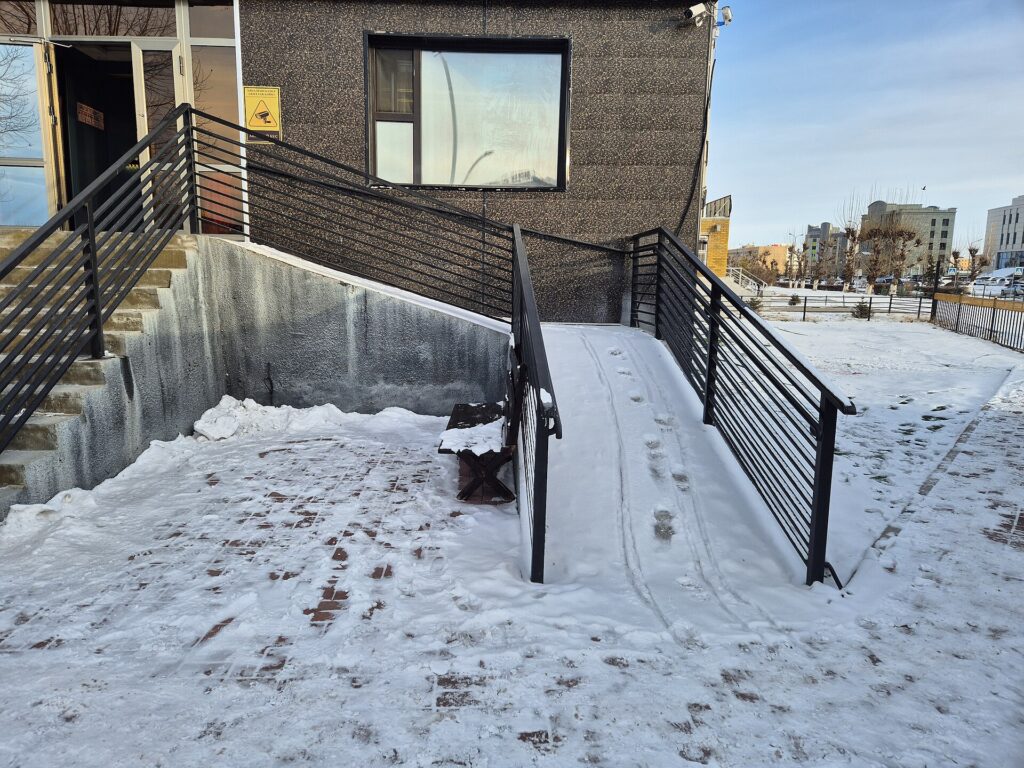
For most people, a hard frost makes the walk to the bus stop slower. For a wheelchair user, it can turn a dropped kerb into a sheet of ice. For someone who can’t risk a fall, it can mean not going out at all. Winter doesn’t just slow disabled people down. Every year, it locks people in.
That isn’t just bad luck. Councils have legal duties, there’s money for heating, and there are ways to get grit where you need it. Here’s your winter survival kit.
The law: councils must deal with snow and ice
In England and Wales, section 41(1A) of the Highways Act 1980 is blunt. A highway authority is “under a duty to ensure, so far as is reasonably practicable, that safe passage along a highway is not endangered by snow or ice.” The highway includes the pavement, not just the road.
In Scotland, section 34 of the Roads (Scotland) Act 1984 requires roads authorities to take reasonable steps “to prevent snow and ice endangering the safe passage of pedestrians and vehicles over public roads.” Pedestrians are named in the law itself.
“Reasonably practicable” doesn’t mean every street is cleared by 7am. It means planning sensibly with the gritters and salt available, then sticking to the plan. So councils publish winter service plans with priority routes. Main roads and bus routes usually come first. Pavements, if treated at all, tend to be in town centres.
| Nation | Who’s responsible | What the rules say |
|---|---|---|
| England and Wales | Your local highway authority (council) | Highways Act 1980 s41(1A): make sure, so far as reasonably practicable, that safe passage isn’t endangered by snow or ice |
| Scotland | Your council, as roads authority | Roads (Scotland) Act 1984 s34: take reasonable steps to protect pedestrians and vehicles from snow and ice |
| Northern Ireland | Department for Infrastructure (DfI Roads) | DfI doesn’t normally salt footways, but works with councils on busy town-centre pavements during longer cold spells |
Where disability comes in
In England, Scotland and Wales, councils are also bound by the public sector equality duty in section 149 of the Equality Act 2010. They must have “due regard” to disabled people’s needs when making decisions, including which routes to grit. A plan that treats roads but never the dropped kerbs, crossings and bus stops disabled pedestrians depend on is open to challenge. See our guide to winning the footway back.
Getting grit where you actually need it
Each council sets its own rules for grit bins. Leeds, for example, looks at how steep a street is, how many people use it, and whether it’s near a school or hospital. Show that your route meets those tests and that a disabled person relies on it. Ask in autumn, not mid-freeze.
- Find the plan. In England and Wales, check which roads your council will grit on gov.uk. In Scotland, search your council’s website for “gritting routes”.
- Map your essential journey: the dropped kerbs and crossing you use, your bus stop, your GP and your pharmacy.
- Request a grit bin, or a refill, through the council’s form. Give the exact location and mention any slope.
- Ask for specific footway points to be added to the plan. Name the kerbs and stop, and explain that without them you can’t leave home safely.
- Ask how disabled pedestrians were considered when the priority routes were set. Keep the reply for any complaint.
“You’ll be sued if you clear your path”: the myth
Every winter, someone claims that clearing the pavement outside your home makes you liable if someone slips. The government’s snow clearing guidance says the opposite: “It’s unlikely that you’ll be sued or held responsible if someone is injured on a path or pavement if you’ve cleared it carefully.” In Northern Ireland, nidirect says the same, citing the Attorney General.
So if a neighbour offers to clear a path to your door and the nearest kerb, say yes. The official advice: clear early while the snow is loose, and don’t use water, which can refreeze as black ice. Use salt, or ash or sand for grip, but not salt from council grit bins.
The winter money: what’s paid, where, and to whom
These payments are automatic if you’re eligible, but only if the right benefit is already in payment. Claim everything you’re entitled to.
| Payment | Where | How much | Who gets it |
|---|---|---|---|
| Cold Weather Payment | England, Wales, Northern Ireland | £25 for each 7-day period when your area’s average temperature is recorded or forecast at 0°C or below, from 1 November 2026 to 31 March 2027 | Pension Credit, Support for Mortgage Interest, and some income-related ESA or Universal Credit claims (for example, not working with limited capability for work) |
| Winter Heating Payment | Scotland, instead of the Cold Weather Payment | £62, paid once from December, whatever the weather | People on certain low-income benefits |
| Winter Fuel Payment | England, Wales, Northern Ireland | £100 to £300. Most households get £200, or £300 if someone is 80 or over | Anyone born on or before 27 June 1960 (qualifying week: 21 to 27 September 2026) |
| Pension Age Winter Heating Payment | Scotland, instead of the Winter Fuel Payment | £105.55 to £316.70 | People of State Pension age |
| Warm Home Discount | England, Wales, Scotland | £150 off your electricity bill | England and Wales: Universal Credit, Housing Benefit, income-related ESA or Pension Credit on 23 August 2026. Scotland: some must apply to their supplier. |
About the £35,000 rule. In winter 2024 to 2025, the Winter Fuel Payment was limited to pensioners on means-tested benefits. Since winter 2025 to 2026 it has gone to all pensioners again. But if your own taxable income is over £35,000, HMRC takes it back through your tax code or Self Assessment. Your partner’s income doesn’t count. Scotland’s pension-age payment works the same way. Northern Ireland has no Warm Home Discount; look at its Affordable Warmth scheme instead.
For the Priority Services Register and keeping powered equipment charged through a power cut, see our guide to energy costs when you’re disabled.
Public transport when the snow comes
Snow often brings cancelled trains and short-notice replacement buses. Your rights don’t change with the weather. If the replacement service isn’t accessible to you, Office of Rail and Road guidance says the train company should offer alternative accessible transport, usually a taxi, at no extra cost. Our rail replacement guide explains how to insist on it. Check for disruption before you leave and confirm your assistance booking. Report iced-over ramps, platforms and bus stops: a bus can’t put its ramp down onto a snowbank.
Keep your chair or scooter going in the cold
Batteries lose range in the cold. These practical tips draw on Motability’s winter advice:
- Store it indoors if you can, or at least under cover, so the battery doesn’t freeze.
- Charge more often and start trips fully charged, following the manufacturer’s instructions. Take the charger on long journeys.
- Check your tyres, and wipe off road salt and slush after trips so it doesn’t corrode anything.
- Be visible, and avoid hills and unlit rural roads when it’s icy.
- Carry extra layers and any time-critical medication. Motability Scheme customers can call Motability Assist on 0800 953 5000 at any time of day.
An ungritted dropped kerb isn’t a minor inconvenience. It can decide whether you get to the pharmacy this week.
Trapped by an uncleared pavement: what to do
- Report it straight away to the council, or to DfI Roads through nidirect in Northern Ireland. Give the exact spot, and say you’re disabled and can’t get past.
- Take dated photos of the kerb, the stop or the slope.
- Keep a log of reference numbers, the days you couldn’t get out and any appointments you missed.
- Complain formally if the council ignores its own plan or your needs. Use our complaint template. If that doesn’t work, go to the public services ombudsman for your nation. In England, that’s the Local Government and Social Care Ombudsman.
- If you’re injured, keep your records and get legal advice quickly. For discrimination advice, call the Equality Advisory and Support Service on 0808 800 0082.
Snow and ice come every year. Being shut in by them shouldn’t. Ask for your grit bin now, claim what you’re owed, and when the council leaves your kerb under ice, put it in writing. Then report it to us too.