The short version
If you cannot see the street or hear the driver, how do you know when to get off? New regulations are finally rolling audio-visual announcements out across Britain's buses. Here is what is required and by when.
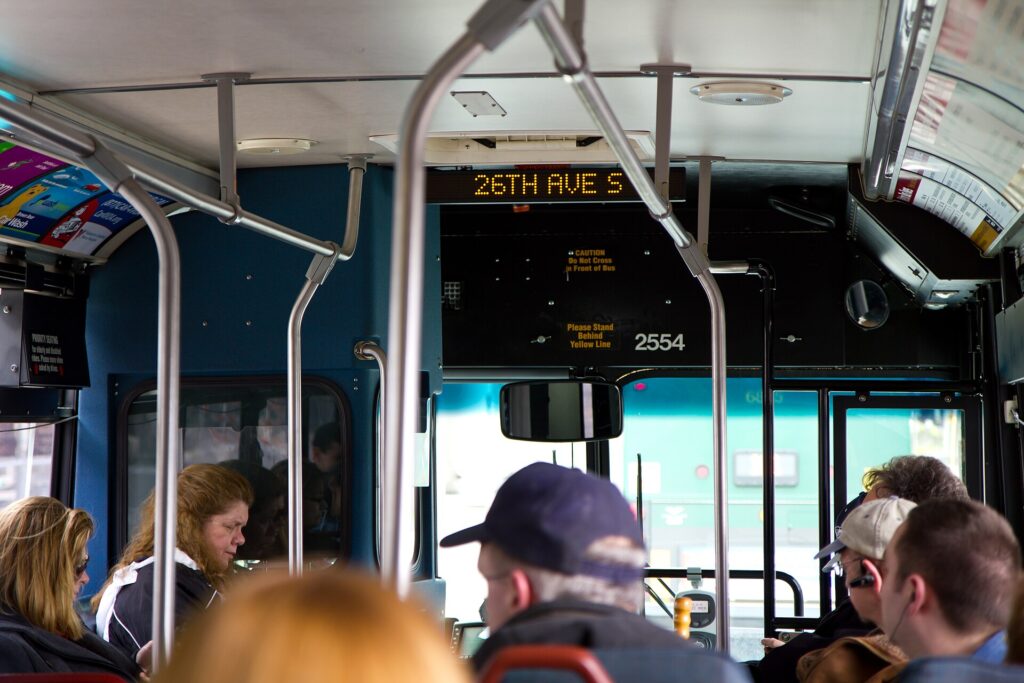
On a London bus, a screen tells you the next stop and a voice announces it. Step onto a bus in most of the rest of the country and, for years, you got neither. You watched out of the window and hoped, or you asked the driver to shout when you got there and hoped they remembered.
For blind and partially sighted passengers, that is the difference between an independent journey and one that depends on the kindness of strangers. For deaf passengers it is the mirror image: the announcement exists, but not for you.
What has changed
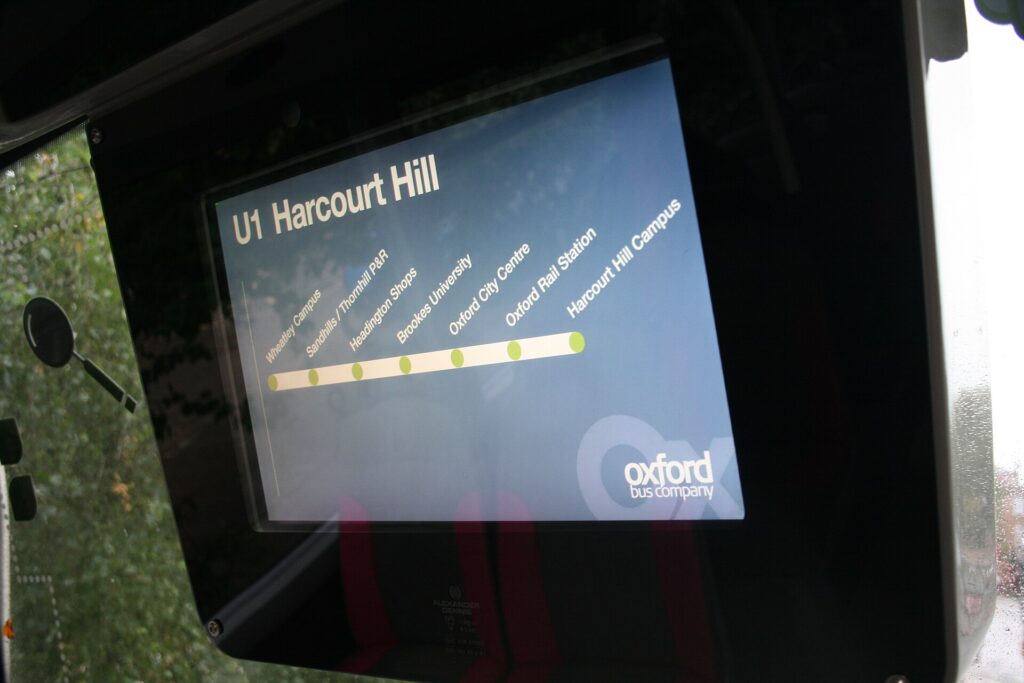
The Public Service Vehicles (Accessible Information) Regulations 2023 require local bus services across Great Britain to provide route and next-stop information in both audible and visible form. In plain terms: an announcement you can hear and a display you can read, giving:
- the route number and destination
- the next stop
- when the bus is diverted, and the fact of the diversion
- the final stop of the journey
The requirement is being phased in, starting from late 2024 and running through to 2026, with different deadlines for different vehicles and operators — newer and larger fleets first, older vehicles and smaller operators later. Some services have exemptions and extensions.
So the honest position today is: it is legally required, it is arriving, and it is not everywhere yet. Which means it is worth knowing what to do when your bus does not have it.
Two systems, one for people who can see out of the window and one for everybody else. Only one of them was ever installed.
Why both forms matter
It is tempting to treat audio and visual as alternatives. They are not.
- Audio only fails deaf and hard-of-hearing passengers, and anyone on a noisy bus.
- Visual only fails blind and partially sighted passengers, and anyone who cannot look up at the right moment.
- Neither fails people with cognitive impairments, people with anxiety about missing a stop, tourists, and anyone travelling an unfamiliar route — which is to say, it fails almost everyone eventually.
This is the classic pattern in access: the adjustment that is framed as being for a minority turns out to be the thing everyone uses. Nobody complains about announcements on the Tube.
What to do when your bus has neither
- Tell the driver where you are going as you board, and ask them to let you know. It should not be necessary, and it works often enough to be worth doing.
- Use a live-tracking app if you can. Many operators and journey planners now show your position on the route in real time.
- Report the vehicle. Note the fleet number, route, date and time, and report it to the operator asking whether the vehicle complies with the Accessible Information Regulations and, if not, when it will.
- Copy in the local transport authority — the council or combined authority. They let the contracts and they answer to councillors.
- Keep a note. One report is an anecdote. A month of dated reports on the same route is evidence.
When it exists but does not work
A screen that is switched off, a volume set to nothing, announcements running a stop behind, or a system that has been muted because a driver found it irritating — all of these are common, and all of them are worth reporting exactly like a missing system. Equipment that is fitted but disabled helps nobody.
Be specific in the report: “the audio was switched off”, “the display showed the wrong stop”, “announcements stopped after Market Street”. Vague complaints get vague answers.
Trains and trams too
The same principle applies on rail. Announcements should be made in audible and visible form, on the train and at the station. Where a display is broken or announcements are not being made, report it — particularly at stations where staffing has been reduced and the screens are now doing the job a person used to do.
And if information failures are leaving you stranded or missing connections, that is a reasonable adjustments issue under the Equality Act, not just a service niggle.


.jpg)
.jpg)