The short version
When cars park across your bus stop, the bus can't pull in, the ramp can't deploy, and nobody boards. Here's how to get your council to protect the stop with a clearway — and what to do in the meantime.
It sounds almost too petty to be a serious access issue: a car parked across a bus stop. But if you use a wheelchair, a mobility scooter, a walking frame — or you simply can’t step off a kerb into moving traffic — a blocked bus stop doesn’t just make your journey harder. It cancels it.
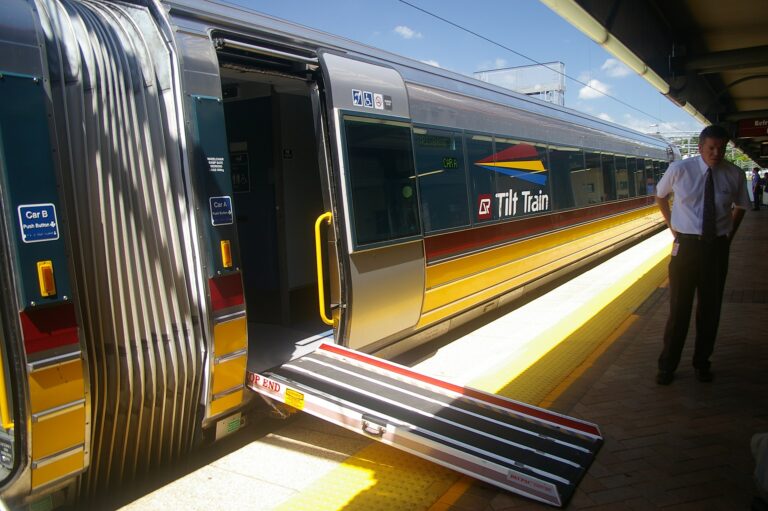
When a bus can’t pull in parallel to the kerb, the driver can’t deploy the ramp safely, and the gap between the door and the pavement becomes a cliff edge. Some drivers will stop in the traffic lane and hope for the best; many, understandably, won’t. Either way, the person left standing (or sitting) at the stop is the one who pays for someone else’s parking.
This one is personal for us. Our own local stop in Yorkshire sits on a main road, and on bad days parked cars block it so completely that nobody can board — wheelchair user or not. The council has so far refused to protect the stop. So this guide is the playbook we’re using ourselves.
Is parking at a bus stop actually illegal?
It depends on the markings — and this is the crucial bit most people don’t know.
- Bus stop clearway (a thick yellow line along the kerb, a wide yellow box marked “BUS STOP” on the road, and an upright sign showing times): stopping or parking here is enforceable. The council can issue penalty charge notices, and in many areas camera enforcement is possible.
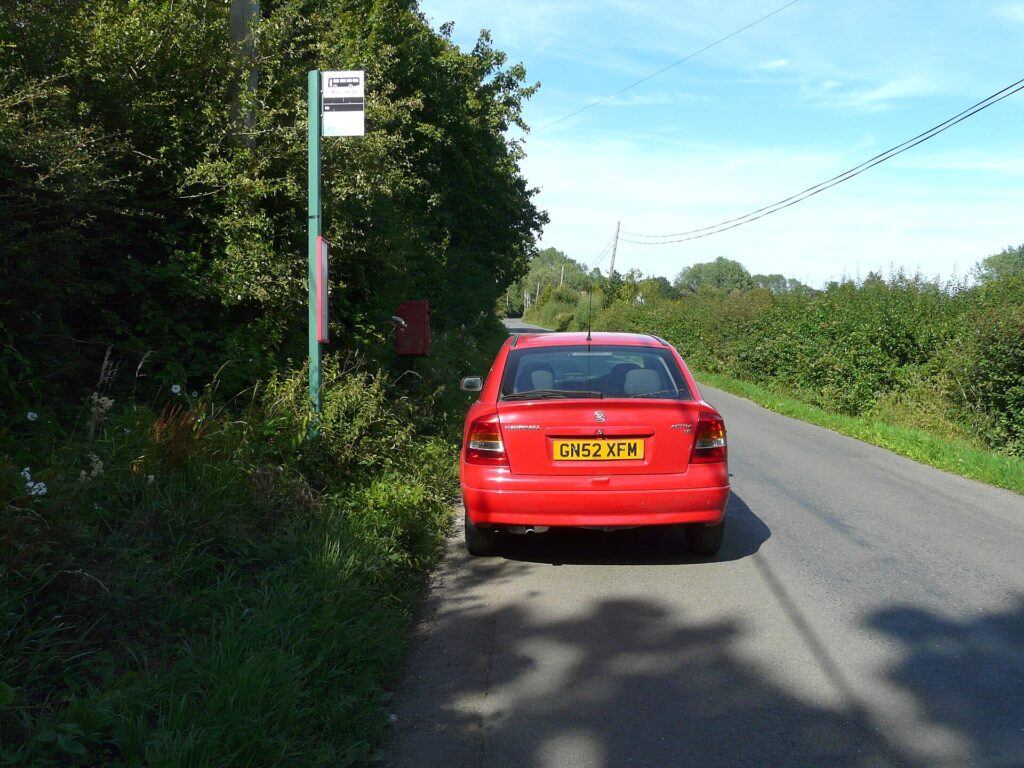
- An unmarked stop (just a flag on a pole, no road markings): parking here is discouraged by Rule 243 of the Highway Code (“DO NOT stop or park at a bus stop”) but it is generally not a civil parking offence, so council wardens usually can’t ticket it.
- Obstruction: regardless of markings, deliberately obstructing the highway can be a police matter — but in practice the police rarely attend for a parked car at a bus stop unless it’s causing danger.
That gap — a stop with no clearway markings — is exactly the situation many of us are stuck with. The fix is to get the council to make a Traffic Regulation Order (TRO) creating a bus stop clearway.
How to campaign for a bus stop clearway
- Document the problem. Photograph the stop each time it’s blocked — with dates and times. A dozen dated photos over a month is far more persuasive than a single complaint. Note every missed bus and, if you can, get the route number and time so the bus operator’s own records back you up.
- Report every incident to the council, in writing (email or their online form), not just by phone. Ask for a reference number each time. You’re building a paper trail.
- Ask the bus operator to support you. Drivers report obstructed stops to their depot. Operators want clearways because blocked stops cost them time and complaints — ask them to write to the council too.
- Make it an Equality Act issue, in writing. Councils have a Public Sector Equality Duty under section 149 of the Equality Act 2010: they must have due regard to the need to advance equality of opportunity for disabled people. A stop that disabled people repeatedly cannot use engages that duty. Say so, explicitly.
- Involve your ward councillors and your MP. A TRO is a political decision as much as a technical one. Councillors can raise it directly with highways officers; a letter from an MP tends to move things up the pile.
- Escalate a refusal. If the council still refuses, use its formal complaints procedure, and if you exhaust that, you can take the matter to the Local Government & Social Care Ombudsman. Mention this in your correspondence — councils know the Ombudsman looks poorly on authorities that ignore documented equality impacts.
What to do on the day the stop is blocked
- If the stop has clearway markings, report the car to the council’s parking enforcement line straight away — many councils aim to send a warden while the vehicle is still there.
- If a vehicle is causing a genuine danger (forcing you into a live traffic lane), call the police on 101 — or 999 if there is an immediate risk.
- Tell the bus operator you were unable to board and why. Ask them to log it as an accessibility failure, not a general comment.
A bus stop that only works when everyone happens to park considerately is not an accessible bus stop. It’s a coin toss.
If you’re fighting a blocked stop of your own, our Help & Support page has a template letter to send your council, and our guide to complaining so people actually listen covers how to escalate. And if you want moral support from people fighting the same fight — that’s what we’re here for. Tell us about your stop.