The short version
One wheelchair space, a buggy in it, and a driver who says there is nothing they can do. A Supreme Court case settled part of this in 2017 — here is what drivers must actually do now.
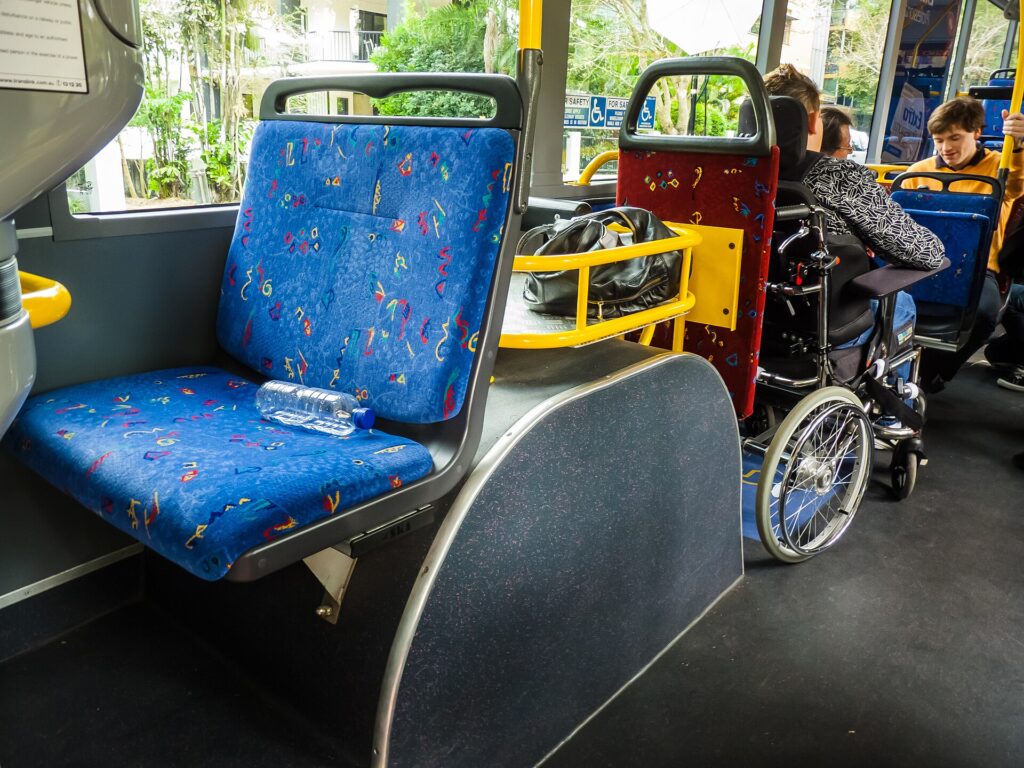
It is the most common bus dispute in the country. There is one wheelchair space. There is a pushchair in it. The parent will not move, and the driver shrugs and says “sorry, I can only ask”.
For years that shrug was effectively the law. It is not any more — though the change is narrower than most people assume, and knowing exactly where the line sits is what makes the difference on the day.
What happened in the Paulley case
Doug Paulley, a wheelchair user from Yorkshire, was refused boarding in 2012 because a woman with a pushchair would not move out of the wheelchair space. FirstGroup’s policy was that drivers could request a passenger to move, but not require it.
The case went all the way to the Supreme Court, which gave judgment in January 2017. The court held that FirstGroup’s policy did not go far enough. A driver who simply makes one polite request and gives up is not doing enough to comply with the duty to make reasonable adjustments.
What the court did not do is give drivers a power to remove passengers, or create an absolute right for a wheelchair user to have the space cleared. That is the part people get wrong, and it is why the argument still happens.
So what must a driver do now?
In practice, the judgment means a driver must do more than ask once and shrug. Where a passenger refuses to move and the refusal is unreasonable, the driver is expected to take further steps — for example:
- making a firm, clear request rather than a tentative one
- explaining that the space is a designated wheelchair space and the bus cannot proceed without it being cleared
- repeating the request, with some pressure behind it
- in some circumstances, declining to move the bus for a short period while the matter is resolved
A driver who does none of that, and simply drives on leaving a wheelchair user at the stop, is on shaky ground.
The bus was not full. The ramp worked. The driver was willing. And still the answer was no, because one person would not move and nobody would insist.
The background duties that make this stick
Two separate things are in play, and it helps to name both.
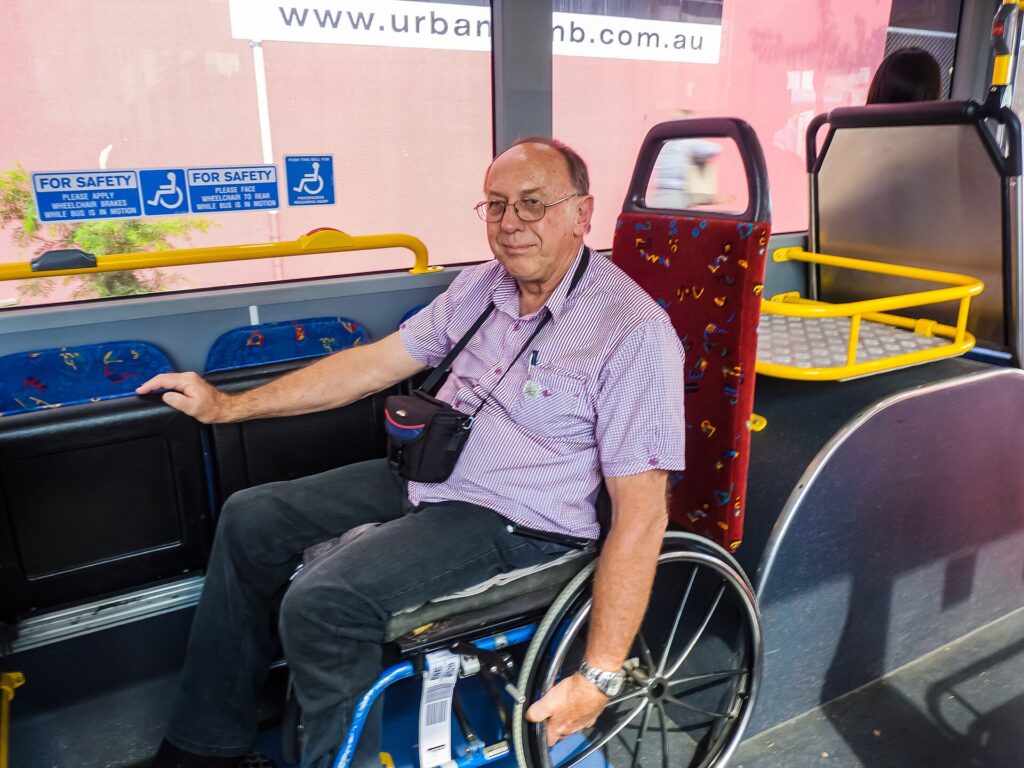
Accessible buses. Under the Public Service Vehicles Accessibility Regulations, buses on local services have had to be wheelchair accessible for years — with a ramp or lift, a designated wheelchair space, priority seating and colour-contrasted handrails. A bus without a working ramp on a local service is a serious problem, not an inconvenience.
Reasonable adjustments. Under the Equality Act 2010, transport providers must make reasonable adjustments so disabled people are not put at a substantial disadvantage. Policies — including how drivers handle the wheelchair space — are exactly the kind of thing that must be adjusted.
What to do at the stop
- Ask the driver directly to clear the space. Not the passenger — the driver. It is the driver’s job, and going through them avoids a passenger-to-passenger row.
- If they say they can only ask: “Since the Supreme Court decision in Paulley, a request alone is not enough. Please make a firm request and explain the bus cannot continue with the space blocked.”
- Stay at the door. Do not step back and let the bus go — once it pulls away, the incident becomes your word against theirs.
- Record the details: route number, fleet number on the vehicle, time, stop, direction. Photograph the vehicle if you can.
- Ask for the next steps. If you cannot board, ask the operator what they are providing instead.
Afterwards
Complain to the operator in writing, quoting the fleet number and time — those two details are what lets them identify the driver and the vehicle. Say plainly that you were refused travel because the wheelchair space was not cleared, and reference the Equality Act duty.
If the operator’s response is poor, escalate to Bus Users UK or London TravelWatch in London, and to your local transport authority, which holds the contracts and the leverage. Our complaints guide has the structure that gets answers.
A word about the other passenger
It is worth saying: the parent with the pushchair is usually not the villain. They are frequently a knackered person with a sleeping baby who has been told by a different driver on a different day that they can use that space. The design of the system pits two groups with genuine needs against each other over one square metre of floor.
The real answer is buses with space for both, clear signage, and drivers trained and backed to manage it. Until then, aim your complaint at the operator, not at the person in the space.
Related: what to do when the bus ramp “isn’t working” and how to get a blocked bus stop cleared.