
The short version
The Equality Act 2010 is the single most useful law a disabled person in Britain can know. Here it is without the legalese: who it covers, what "reasonable adjustments" really means, and how to use it.
Most access arguments in Britain end — or should end — at the same place: the Equality Act 2010. It applies in England, Wales and Scotland, and it covers shops, pubs, theatres, buses, trains, councils, schools, employers, landlords and websites. If a place serves the public, the Act almost certainly applies to it.
Who is protected?
You’re protected as disabled under the Act if you have a physical or mental impairment with a substantial, long-term effect on your ability to do normal daily activities. “Long-term” broadly means 12 months or more (or likely to recur). You do not need to receive benefits, carry proof, or “look disabled” to be covered.
The four ways services discriminate
- Direct discrimination: treating you worse because you’re disabled (“we don’t let wheelchairs in”).
- Indirect discrimination & discrimination arising from disability: policies that look neutral but hit disabled people harder (“no dogs” applied to assistance dogs; “card only at the high counter” with no table service).
- Failure to make reasonable adjustments: the big one — see below.
- Harassment and victimisation: degrading treatment, or punishing you for complaining. Complaining is itself protected.
Reasonable adjustments: the heart of the Act
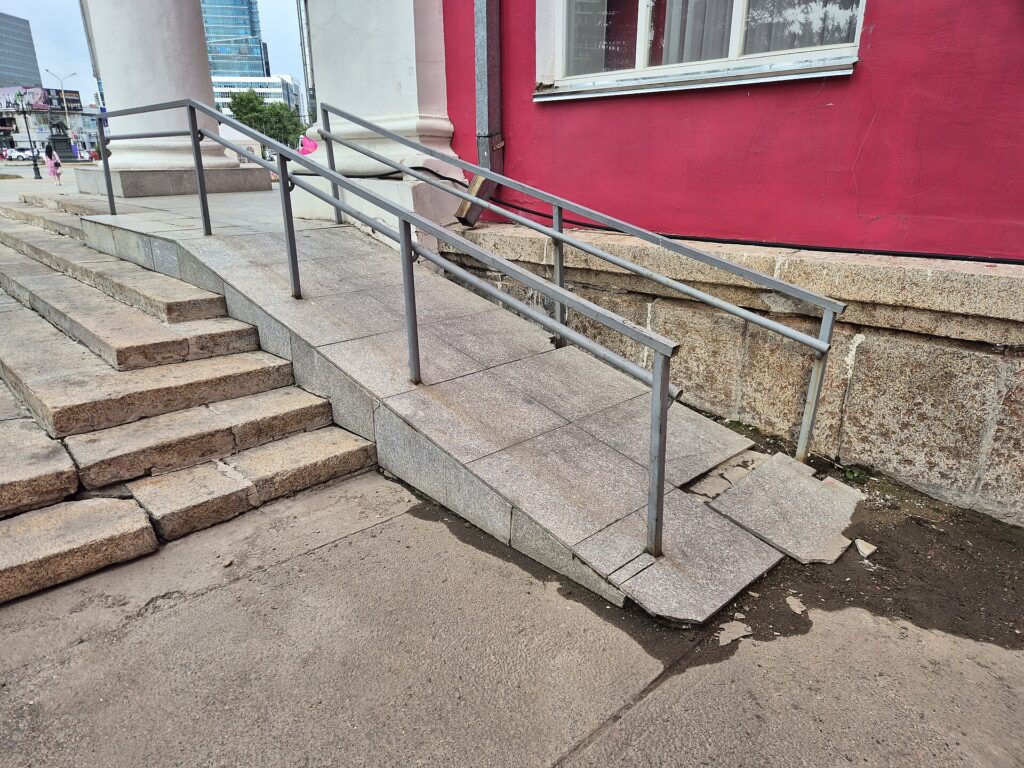
Service providers must take reasonable steps to remove barriers — changing policies (“no dogs”), providing aids (a portable ramp, a hearing loop, menus in large print), and dealing with physical features that shut people out. Two things make this duty stronger than most people realise:
- It’s anticipatory. Businesses are supposed to plan for disabled customers in general, in advance — “you’re the first wheelchair user we’ve had” is an admission, not an excuse.
- It’s paid for by them. A venue cannot pass the cost of an adjustment on to you — no “ramp surcharge”, no paid companion ticket where a free one is the adjustment.
“Reasonable” depends on the size and resources of the organisation: a national chain is expected to do far more than a corner shop. But cheap, simple fixes — a ramp, a moved table, staff training, an unlocked accessible loo — are almost always reasonable, which is why naming this duty in a complaint is so effective.
Using it, step by step
- Ask for the adjustment at the time, specifically and politely. Many failures are ignorance, not policy.
- Complain in writing, naming the Equality Act 2010 and the adjustment you asked for. Our complaints guide has the structure and a template.
- Get free expert advice from the Equality Advisory & Support Service (EASS): 0808 800 0082. Citizens Advice can also help.
- Court, if it comes to it: service discrimination claims go to the county court (sheriff court in Scotland), normally within six months less one day of the act you’re complaining about. Many claims settle once a well-drafted letter before action arrives.
The Equality Act doesn’t ask businesses to be heroic. It asks them to be reasonable — and it gives you the right to insist on it.
Note: in Northern Ireland the equivalent protection comes from the Disability Discrimination Act 1995, which works similarly but has differences — the Equality Commission for Northern Ireland can advise.