The short version
Rail staff still tell disabled passengers they should have booked. They are wrong. Turn Up and Go is official industry policy at every station in Britain — here is how it works and what to say when it is refused.
Ask a non-disabled friend how they plan a train journey and they will say something like “I check the app and go”. Ask a wheelchair user and you will hear about booking windows, reference numbers, phone queues and the small dread of arriving to find nobody knows you are coming.
That gap is the single biggest inequality on the railway, and it is not because the rules require it. You are entitled to turn up and travel. A lot of staff either do not know that or would rather you did not.
The two routes, and why the difference matters
Booked assistance means contacting Passenger Assist in advance. The industry standard is that you can book up to two hours before you travel — a window that has been cut repeatedly over the years, from 24 hours, to six, to two. Book and your request is logged, passed to every station on the route, and staff should be waiting.
Turn Up and Go means arriving without booking and asking for help on the spot. This is available at every station in Britain. It is not a favour, it is not an exception, and it is not conditional on the station being busy or quiet.
A railway you can only use if you planned it two hours ago is not a public transport network. It is an appointment system.
Why “you should have booked” is wrong
Operators are required to publish an Accessible Travel Policy setting out the help they provide, and those policies are approved by the Office of Rail and Road. Turn Up and Go is a standing commitment across the industry. If a member of staff tells you help is booking-only, they are describing their own preference, not the policy.
It also runs straight into the Equality Act 2010. Requiring disabled passengers — and only disabled passengers — to give notice before travelling is a condition placed on one group and not another. Where an operator could reasonably help without notice, insisting on advance booking is very hard to defend as a reasonable adjustment.
What actually happens when you turn up
- Find staff early. The ticket office, the gateline, a mobile assistance team, or the help point on the platform. Give yourself more time than you would like to need.
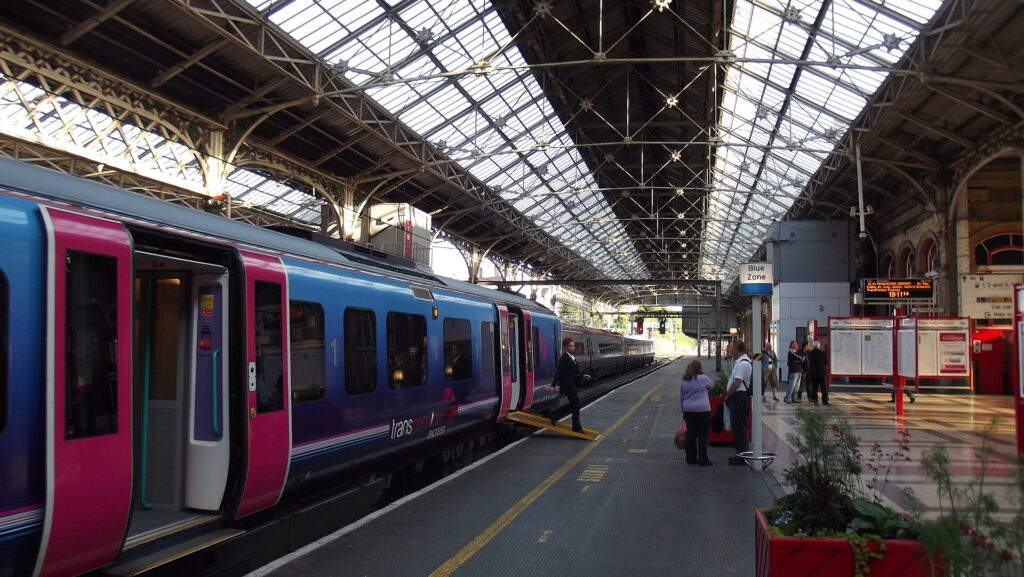
- Say what you need, plainly. “I need a ramp to board the 14:12 to Leeds, and a ramp to get off at the other end.” Specific beats polite.
- Ask them to confirm the destination has been told. This is the step that most often fails — help at the origin is easy, help at the far end depends on a message actually being sent.
- Get a name. Not to be difficult; because it makes the arrangement real, and it gives you something concrete if it goes wrong.
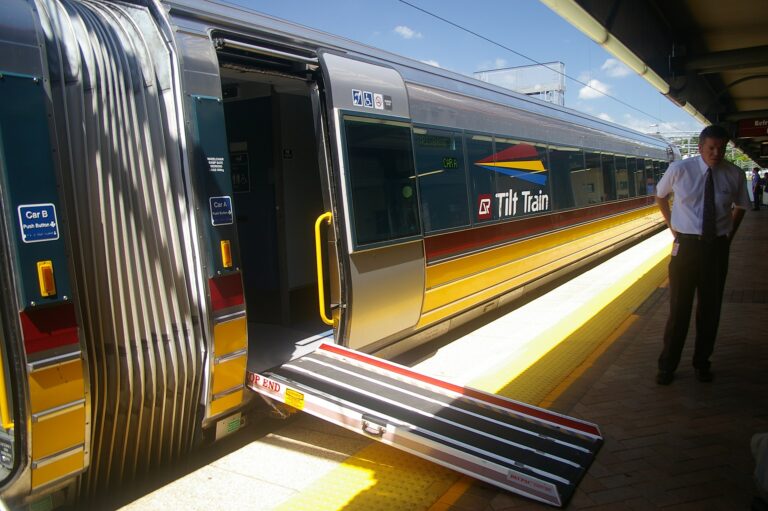
- At unstaffed stations, use the help point before you travel and expect the train crew to deploy the ramp — on many services the conductor carries one.
When they say no
Stay calm and escalate in this order. Most refusals collapse at the first or second step.
- Name the policy. “Turn Up and Go is industry policy and it is in your Accessible Travel Policy. Please can you arrange assistance.” Ask them to check with control if they are unsure.
- Ask for a manager or the duty station manager.
- Ask for the refusal in writing, or note the time, station and staff name yourself.
- Ask what they are doing instead. If they genuinely cannot get you on that train, they must get you to your destination another way — including by accessible taxi at their expense.
- Complain afterwards. To the operator first, then the Rail Ombudsman if the answer is inadequate. Copy in the Office of Rail and Road for a policy failure rather than a one-off.
When booking is still worth it
None of this means booking is pointless. It is genuinely useful when:
- you are changing trains, especially with a tight connection
- you need a wheelchair space reserved on a busy long-distance service
- you are travelling very early, very late, or to a small unstaffed station
- your journey involves more than one operator
- you simply want the reassurance
The point is not that booking is bad. The point is that not booking must never be treated as your mistake.
The honest problem
Turn Up and Go works well at large staffed stations in the middle of the day. It works much less well at 6am on a Sunday at a rural halt where the “station” is a shelter and a help point that rings somewhere else. Staffing cuts have made this worse, and every ticket office closure proposal makes it worse again.
That is a fight worth having with your MP, your local transport authority and the operator. In the meantime, know the policy, use it, and record every time it fails — because those records are what makes the case.
More on what happens when the system breaks: Passenger Assist and what to do when it fails.