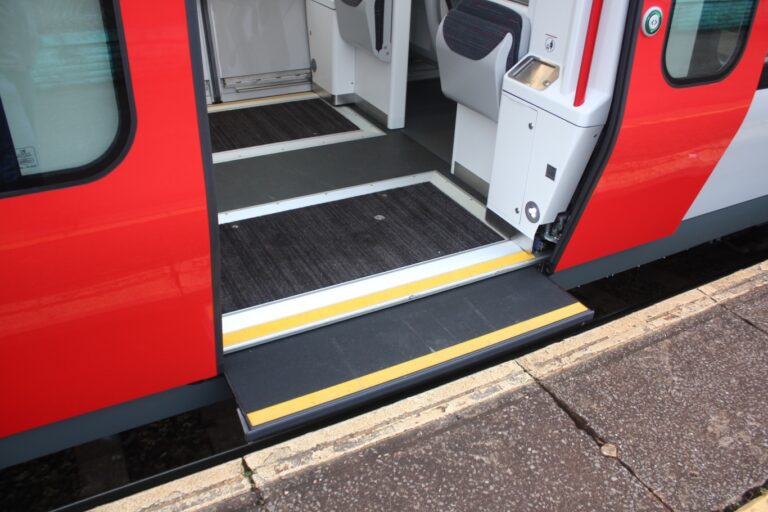
The short version
A departure board tells you a time. A live map tells you the truth: where your train actually is, right now, and which platform it is heading for. For disabled passengers, that difference is not a gadget — it is the number of minutes you spend standing on a cold platform.
We spend most of this site writing about what is broken. This post is about something that helps: the UK Live Rail Map — a free, browser-based map showing every train on the network, moving, in real time, with live delays, station departure boards and the platform your train is expected at.
For most passengers that is a nice toy. If you are disabled, it quietly solves half a dozen problems that departure boards never have.
The problem with “On time”
A departure board gives you a promise: 14:12, On time. It keeps saying On time until, quite suddenly, it says something else — Delayed, or a new platform, announced three minutes before arrival to a footbridge’s worth of stairs.
For a non-disabled passenger that is an irritation. If standing hurts, if your station’s only seats are on the wrong platform, if cold sets off your pain, if a last-minute platform change over a footbridge is simply not something your body can do — then every minute of uncertainty has a physical cost. The board makes you pay it at the station. A live map lets you pay it at home, in a chair, in the warm.
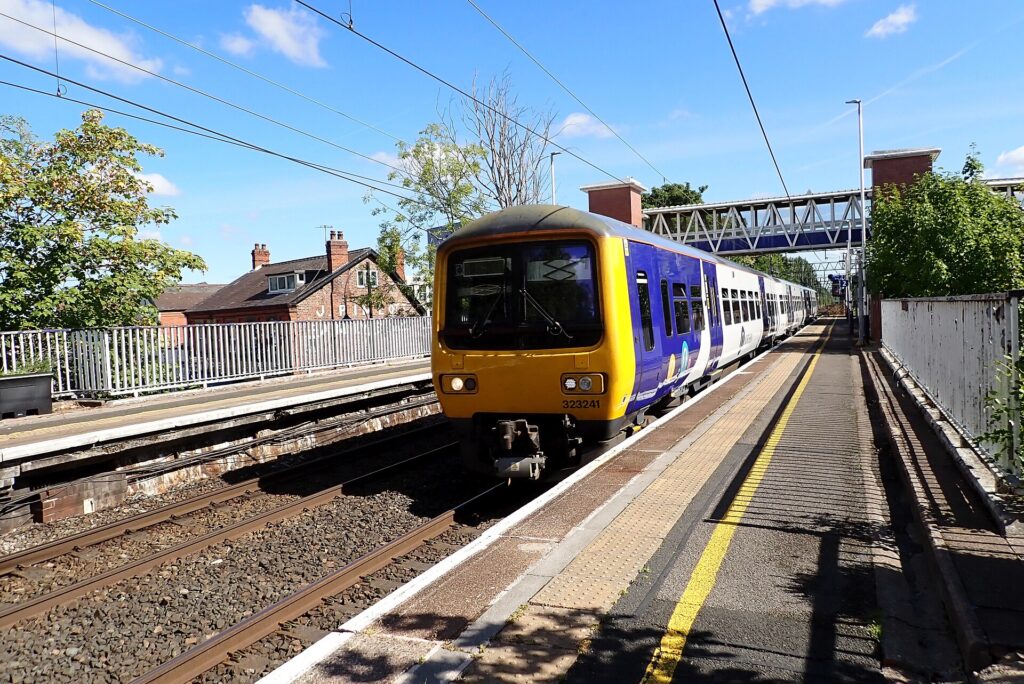
What the map actually does
- Shows every train moving on the map — you can see your service coming from two stations away, not just read a prediction about it.
- Live arrivals and departures for any station, with the expected time and the platform number — so you can position yourself early instead of dashing late.
- A “follow this train” mode that tracks your service continuously — before you board and while you are on it.
- A “fastest to…” finder for the quickest next service to where you are going.
- Station information and departure boards in one place, without installing anything — it runs in the browser on any phone.
- A share-position option, so the person meeting you can watch the train instead of texting “where are you now?” every ten minutes.
Time your arrival so the wait happens at home instead of on the platform. For anyone whose body charges by the minute for standing, that is the entire value of live tracking in one sentence.
Six specifically disabled uses
- Arrive when the train does, not when the timetable hoped. Watch it leave the previous station, then set off. Ten fewer minutes standing is ten fewer minutes of pain, fatigue or anxiety — and at stations with no accessible seating, it is everything.
- Beat the platform change. The expected platform shows on the board early. If your station’s step-free route to platform 2 takes eight minutes via the lift, you can start now, not when the announcement panics everyone else across the footbridge.
- Count your stops when the announcements fail. We have written about audio-visual information — when the on-board screens are broken or silent, following your own blue dot on the map tells a deaf passenger, an anxious passenger or anyone in an unfamiliar place exactly where they are and how many stops remain.
- Manage your assistance booking. If Passenger Assist is meeting you with a ramp and your train is running 20 minutes down, you can see that — and so can the person meeting you at the other end.
- Travel spontaneously with more confidence. Turn Up and Go is your right; a live map makes it far more usable, because you arrive as the train approaches rather than gambling on the timetable.
- Keep the receipts. When a journey goes wrong, you watched it go wrong in real time — which makes the Delay Repay claim and the complaint letter precise instead of approximate.
The honest small print
Two things to know, because we do not do uncritical recommendations.
First, despite the address, this is an independent tool, not the official National Rail Enquiries site — it is built on live network data with OpenStreetMap and OpenRailwayMap underneath. That is not a criticism; some of the most useful rail tools in Britain are independent. But book tickets and assistance through the usual channels.
Second, live positions come from signalling data and can run a minute or so behind reality, and no map knows whether the lift at your station is working. Use it alongside — never instead of — booked assistance, the operator’s live status page, and our own UK Step-Free Station Map for whether the station itself will let you reach the platform at all.
The bigger point
Information is an access feature. The same journey with good information needs less standing, less asking, less adrenaline and fewer last-minute dashes — which for a lot of disabled passengers is the difference between travelling and not bothering.
The railway itself has been slow to learn that lesson. Tools like this one prove how little it would take: the data already exists, it is already public, and one well-made map turns it into shorter waits and calmer journeys. Add it to your phone’s home screen, and see how much of the platform wait you can leave at home.