The short version
A car on the pavement, a blocked dropped kerb or a shop's A-board can end a journey as effectively as a locked door. The law is a patchwork — here's what applies where you live, and how to get it enforced.
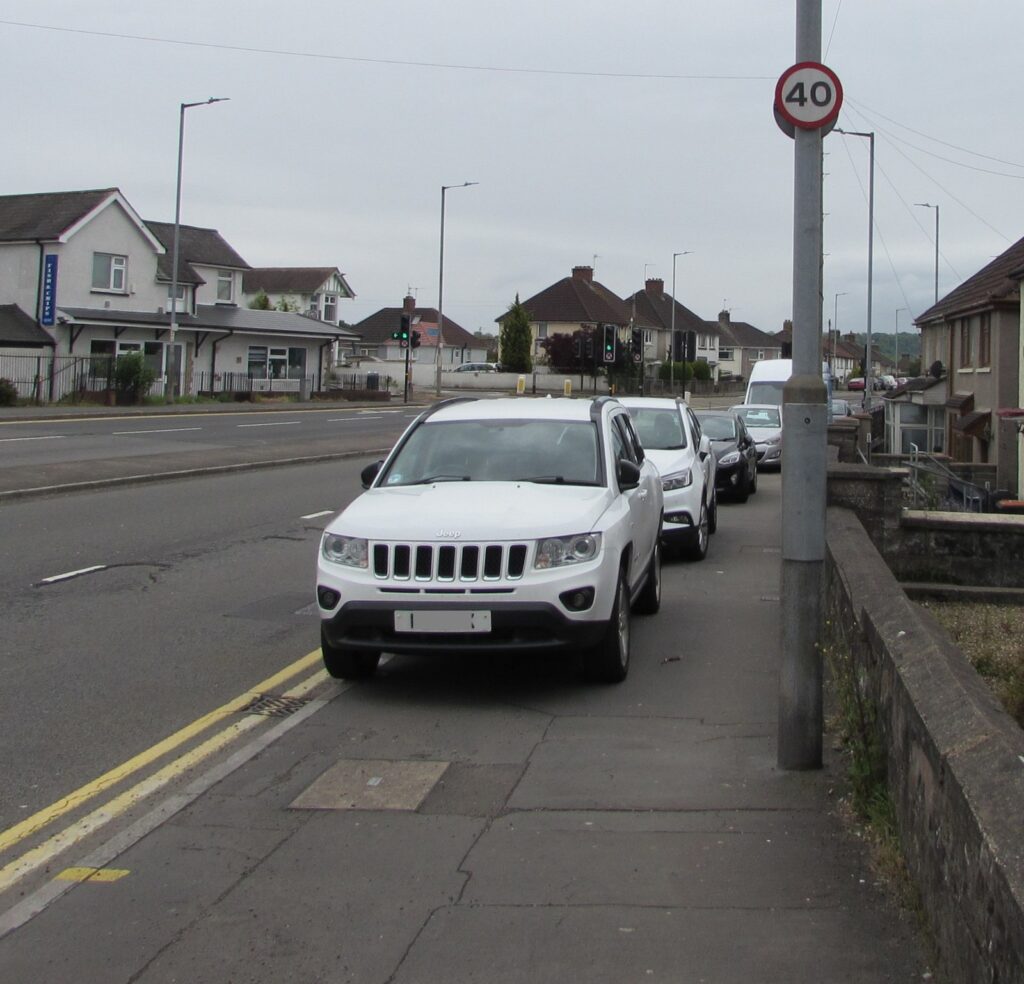
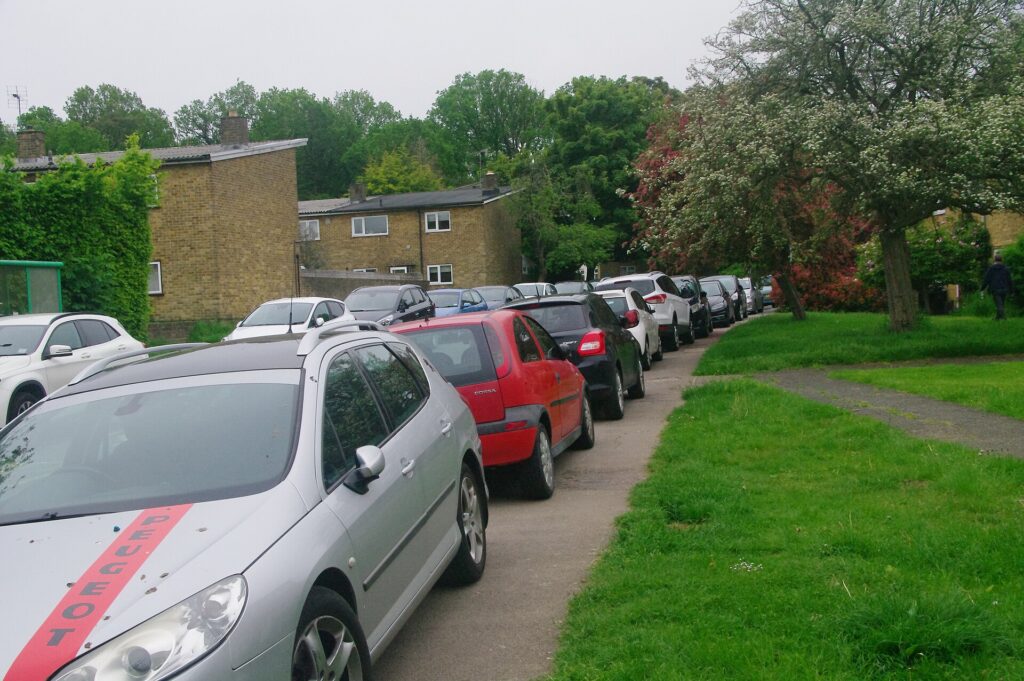
The pavement is the most-used piece of transport infrastructure in the country and the least defended. Park a car across a road and there’s uproar. Park it across a footway — forcing a wheelchair user, a blind pedestrian or someone with a pram into live traffic — and it barely registers.
Pavement parking: it depends where you are
- London: pavement parking has been banned since the 1970s. Councils enforce it and can ticket.
- Scotland: a national ban came into force in 2023 under the Transport (Scotland) Act 2019, with councils enforcing it (some local exemptions apply).
- England outside London: there is no general ban. Successive governments have consulted on one and not delivered it. Unless your council has made a specific Traffic Regulation Order for that street, a car on the pavement usually isn’t a civil parking offence at all — though the police can act if it causes an obstruction or danger, and driving on a footway is itself an offence.
- Wales: reform has been under way, with councils gaining powers to tackle obstructive pavement parking — check your council’s current position.
That English gap is why so many complaints go nowhere: people report to the council, the council says it isn’t theirs, the police say it isn’t serious enough, and the resident gives up. Knowing which door to knock on is half the battle.
Dropped kerbs: stronger ground
Parking across a dropped kerb — the ramped section at a crossing point or a driveway — is enforceable by councils operating civil parking enforcement, which is most of them. This is often your best lever, because it’s the barrier that most directly ends a wheelchair journey and it’s the one councils can actually ticket.
Also worth reporting: dropped kerbs that are missing, broken or badly built — a crossing point with a lip, a kerb that drops on one side of the road but not the other, tactile paving that’s worn away. Councils have highways duties and maintenance budgets, and repeated reports with photos get results, especially with a councillor copied in.
A-boards, bins and scaffolding
Shop advertising boards, wheelie bins left out for days, café tables and badly planned scaffolding all narrow the footway. Councils can act on obstruction of the highway and licence (or refuse to licence) items placed on it. Many have policies requiring a minimum clear width — often around 1.5 metres — precisely so wheelchairs and guide dog users can pass. Ask your council what its policy is; if it has one and isn’t enforcing it, that’s a strong, specific complaint.
Making the report land
- Photograph it with the date, and ideally show the width left to pass — a wheelchair needs about 90 cm, and safe two-way footway is much more.
- Report in writing to the right body: council parking enforcement (dropped kerbs, London/Scotland pavement parking), council highways (broken kerbs, obstruction, A-boards), police 101 (danger or obstruction where the council has no power).
- Keep a log. One report is an incident; twenty dated photos of the same spot is a case for a Traffic Regulation Order or a bollard.
- Name the duty. Councils have a Public Sector Equality Duty under the Equality Act 2010 to have due regard to the needs of disabled people. Say so when a route is repeatedly impassable.
- Escalate through the council’s complaints procedure and then, if needed, the Local Government & Social Care Ombudsman.
You should not have to be a campaigner to get to the shops. But until the law catches up, the people who log it, photograph it and keep asking are the ones who get the bollard installed.
Fighting a blocked bus stop as well? Our guide to getting a bus stop clearway uses the same playbook. And you can pin the exact spot on our map from your phone.