
The short version
Over 350,000 people in the UK live with aphasia after stroke or brain injury; thousands more speak through devices, or with a stammer, or not at all. Intelligence intact, phone lines impossible. Here is what they are owed, and what actually helps.
Lose the use of your legs and the world offers you ramps, however grudgingly. Lose the use of fluent speech and the world mostly offers you impatience.
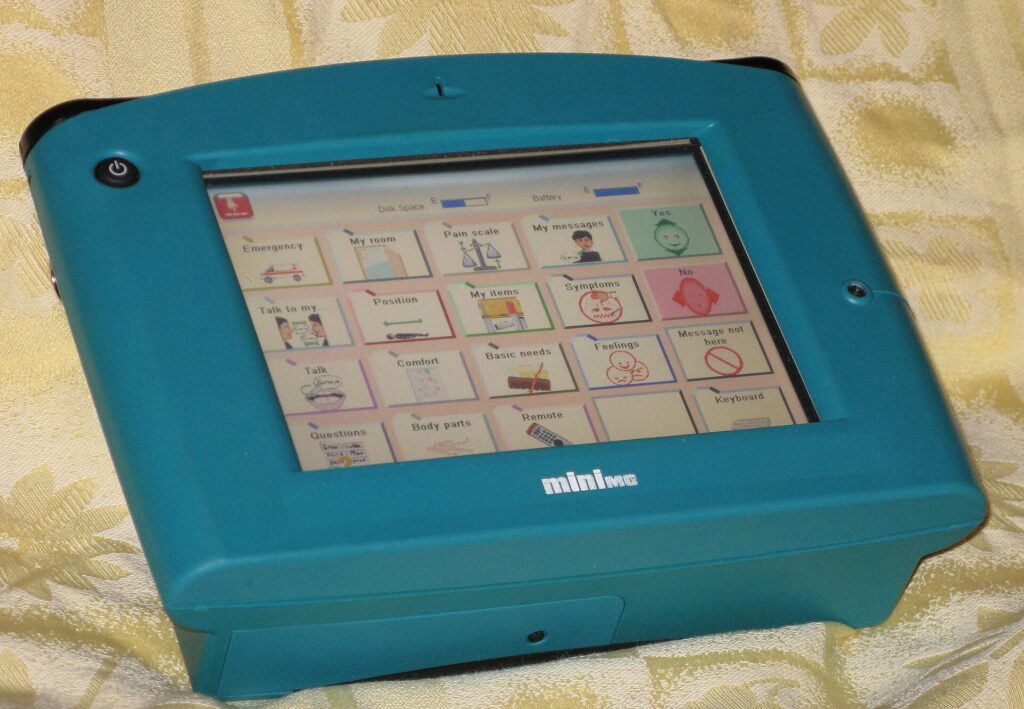
Over 350,000 people in the UK live with aphasia — a language disability, usually after stroke or brain injury, that disrupts speaking, understanding, reading or writing. Others communicate through AAC (augmentative and alternative communication — from letter boards to speech-generating devices), or after a laryngectomy, or with a stammer, or with conditions like motor neurone disease or cerebral palsy shaping their speech. What almost all share: the intelligence is intact. Aphasia is a language problem, not a thinking problem — and being spoken to like a child is the injury on top of the injury.
The everyday walls
- Phone-only systems — GP booking lines, banks, utilities, “just give us a quick call”. For someone with aphasia or a stammer this is a locked door; voice-recognition menus are worse.
- Security questions at speed — banks reading a script that flags hesitation as fraud. People with stammers get cut off as “suspicious” for the sound of their own voice.
- Time pressure everywhere — the queue behind you, the ticket window, the consultation running late. Aphasia needs seconds that systems refuse to give.
- Being talked past — staff addressing the companion, the carer, anyone but the person. AAC users watch people literally walk away during the seconds their device takes to speak.
Ramps for speech cost nothing: time, patience, a pen, and talking to the person rather than about them. The cheapest adjustments in this entire field are the ones speech-disabled people can’t get.
What the law gives you
Communication disabilities are disabilities under the Equality Act, and the auxiliary-aids limb of the reasonable adjustments duty is built for exactly this:
- An alternative to the phone — email, web chat, in-person — is a textbook reasonable adjustment. A service that is phone-only after being asked for an alternative is a service refusing to adjust; the same logic as our inaccessible websites piece, in reverse.
- The NHS must ask, record and meet communication needs under the Accessible Information Standard — longer appointments, communication support, materials in accessible formats. Get it flagged on your record once, in writing.
- Relay UK (text-relay for phone calls) and video relay for BSL users are free infrastructure; banks and utilities increasingly support both. emergencySMS covers 999 by text once registered.
- In meetings that matter — medical, legal, benefits — you can bring a supporter, and for PIP the communication activities score points: claim what is actually true under pressure, not what you manage on a good day at home.
What actually helps (pin this to every staff-room wall)
- Talk to the person, at normal volume, as an adult. Aphasia is not deafness and not confusion.
- Give it time. Count three seconds before rescuing a sentence. Do not finish it uninvited.
- One thing at a time — short sentences, one question, not three options in a row.
- Offer another channel: pen and paper, typing, pointing, yes/no questions. “Would writing be easier?” is respect, not condescension.
- Wait for the device. AAC takes seconds to compose. The pause is the person talking.
- Check, don’t assume: “Have I got that right?” beats a guessed nod every time.
Who to know
The Stroke Association runs aphasia support and communication groups; Speakability-style local groups exist in many towns; Communication Matters is the UK AAC organisation; STAMMA supports people who stammer, including challenging phone-security discrimination; and speech and language therapists (via GP referral) remain the gateway to AAC assessment and equipment.
The UK has also adopted a Communication Access Symbol — a tick-and-speech-bubble mark with free training behind it, developed with the royal college for speech therapists. If a business you use displays it, staff have been trained in exactly the list above. If your regulars haven’t heard of it, telling them is a five-minute act of campaigning — and if they refuse to adjust at all, you know where the letters go.