
The short version
For tens of thousands of Deaf people, English is a second language and BSL is the first. The BSL Act recognised the language; the Equality Act and the NHS's own rules are what actually oblige anyone to provide an interpreter. Here is how to make them.
British Sign Language is a full language — its own grammar, its own history, recognised in law by the BSL Act 2022. For many Deaf people it is their first language, and written English a second. That single fact explains most of what goes wrong: services assume a notepad or a lipreading effort is “communication”, when what is happening is a person being asked to manage their healthcare, legal affairs or job interview in a foreign language.
What the law actually provides
- The BSL Act 2022 recognised BSL and requires government reporting and guidance — symbolically important, practically thin. It creates almost no individual rights.
- The Equality Act 2010 is where the rights live: an interpreter is a textbook auxiliary aid under the reasonable adjustments duty. Services, employers, courts and councils cannot lawfully wave at a family member and call it access.
- The NHS’s Accessible Information Standard obliges health and social care to identify, record and meet communication needs — for a BSL user, that means a qualified interpreter, booked and paid for by the service. Not your teenager. Not a nurse who did Level 1. Not a shrug.
- 999 BSL provides round-the-clock video-relay access to the emergency services, and Relay UK covers voice calls by text. Register for both before you need them.
Asking a patient’s child to interpret a cancer conversation is not an adjustment. It is the service outsourcing its legal duty to a frightened twelve-year-old.
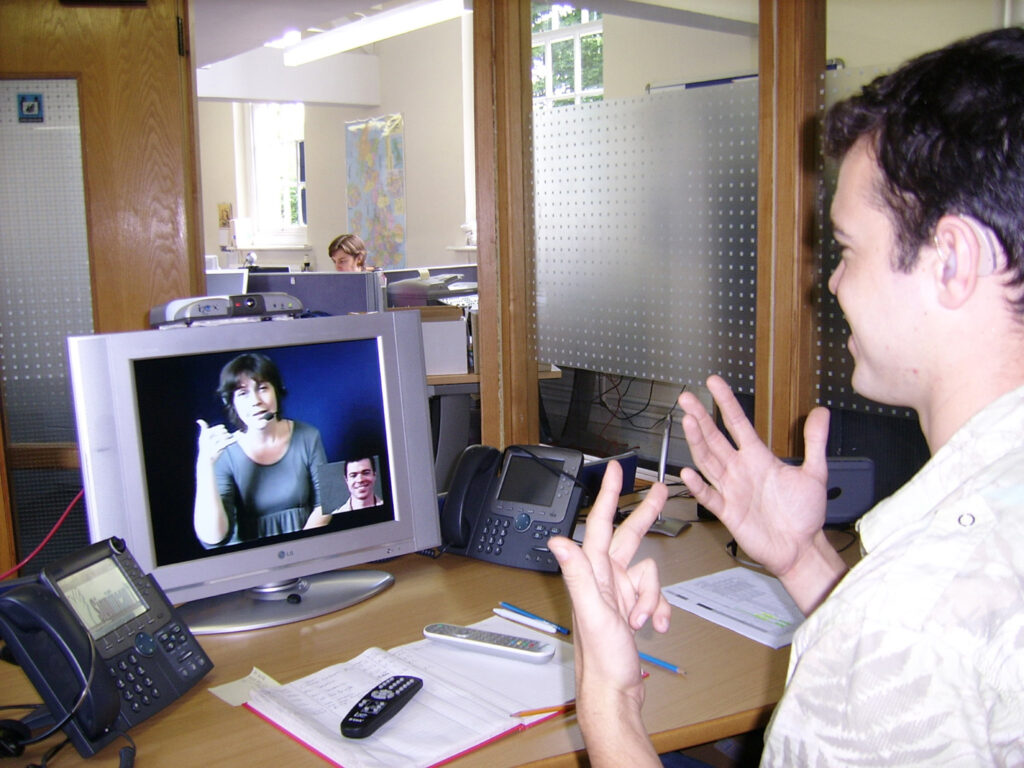
The recurring battlegrounds
- Healthcare: appointments booked with no interpreter despite the flag on your record. Insist the need is recorded once, then quote it: “My record states BSL interpreter required under the Accessible Information Standard. Please confirm one is booked, or rearrange.” A missed interpreter is grounds for a complaint every single time — they stop forgetting when it costs them paperwork.
- Work: Access to Work funds workplace interpreting — including substantial ongoing awards for BSL users — plus interpreted job interviews. Employers’ own duty covers meetings, training and the social fabric of work, not just formal occasions.
- Services and shops: video relay for banks and utilities is increasingly standard — ask for it by name; SignVideo and similar services list who’s signed up. For one-off complex matters (a mortgage appointment, a solicitor), a booked interpreter is a reasonable adjustment for the provider to fund.
- Parents and children: deaf children’s communication support at school runs through the EHCP system; the National Deaf Children’s Society is the specialist ally.
Practical armoury
- Ask services to record your communication needs once, then hold them to their own record.
- Book interpreters through registered providers (NRCPD-registered interpreters) for anything that matters — qualified interpreting is a profession, not a skill a colleague half-has.
- Put refusals in writing and use the complaints ladder; for discrimination, the EASS helpline has textphone and BSL routes.
- The Sunflower lanyard and deaf-awareness cards help with the everyday layer — the shop counter, the station — where an interpreter will never be present and staff patience is the adjustment.
And for hearing readers who run anything: deaf awareness is mostly free. Face the person, keep your mouth visible, write things down without being asked twice, learn that shouting helps nobody — and if your organisation serves the public, find out today how a BSL user books an interpreter with you. If the answer is a blank look, that is the gap.