The short version
One in six working people with diabetes feel their employer has discriminated against them, says Diabetes UK. From hypo breaks and DVLA insulin rules to school healthcare plans and pump-safe airport security, here's what the law actually gives you, and how to make it stick.
More than 4.7 million people in the UK now have a diabetes diagnosis, according to Diabetes UK, and nearly 1.3 million more have type 2 without knowing it. Diabetes UK also reports that one in six working people with diabetes feel their employer has discriminated against them because of it. Add schools and airport security, and the rules too often fail the people they are meant to protect.
Type 1 or type 2, the law is on your side. Here’s how to use it.
When diabetes counts as a disability
Under the Equality Act 2010, you’re disabled if an impairment has a substantial (more than minor or trivial) and long-term effect on your normal day-to-day activities. Diabetes isn’t automatically covered, but one rule does most of the work: the effect is judged as if you weren’t having treatment. So the question isn’t “how are you on insulin?” It’s “what would happen without it?”
That’s why Diabetes UK says diabetes treated with insulin or other medication is generally seen as a disability, whether it’s type 1, type 2 or another type. If yours is managed by diet alone, it’s less clear-cut and depends on its actual effects. Only a tribunal or court can decide for certain. In Northern Ireland, the Disability Discrimination Act 1995 gives similar protection.
Once you’re covered, you have the right to reasonable adjustments. You’re also protected from discrimination arising from disability, which means being treated badly because of something linked to your diabetes, such as a hypo, a sick day or needing to eat at your desk.
Diabetes at work: breaks, testing, hypos and the DVLA
Your employer must not ask about your health before offering you a job (section 60 of the Equality Act), apart from narrow exceptions. For most jobs you don’t have to disclose at all. But if you need adjustments, you’ll need to explain what your diabetes means day to day. Diabetes UK’s work guide suggests adjustments such as:
- Flexible meal and tea breaks, at different times from colleagues if needed.
- Time and a private space to check your glucose, inject, and treat a hypo.
- Time off for your annual review and diabetes education courses.
Being disciplined for a hypo, or for the time it took to treat one, can be discrimination arising from disability unless your employer can justify it. Diabetes UK says blanket bans in the emergency services have been lifted, and those services now decide case by case. The armed forces are the exception. They still turn away people with diabetes, and the Equality Act allows it.
Driving on insulin: Group 1 and Group 2
If you drive, the DVLA’s rules matter (the DVA in Northern Ireland). You must tell the DVLA if your insulin treatment lasts, or will last, over 3 months. If you drive a bus or lorry, you must stop driving and tell them when you start insulin. You can be fined up to £1,000 for not declaring a condition. On tablets, check with your doctor: car drivers may not need to declare, but bus and lorry drivers must.
| Insulin-treated | Car/motorbike (Group 1) | Bus/lorry (Group 2) |
|---|---|---|
| Severe hypos (needing someone else’s help) | Tell DVLA after 2 or more while awake in 12 months | Stop driving and tell DVLA after just one, even during sleep |
| Hypo awareness | Must be adequate: able to spot a hypo in time to stop safely | Must be full awareness |
| Glucose checks | At least twice a day (even on non-driving days), before driving, and every 2 hours on the road | Same |
| CGM | Allowed, with a finger-prick meter as backup | Same |
| Extra checks | Licence usually for 1, 2 or 3 years | Yearly exam by an independent diabetes specialist |
The DVLA says don’t drive at 4.0 mmol/L or below. Between 4.0 and 5.0, have a fast-acting carbohydrate snack first. If you go low at the wheel, stop safely, switch off the engine and take the keys out of the ignition. Then wait at least 45 minutes after your glucose is back to 5.0 or above before driving again. The full rules are on GOV.UK.
At school: the plan your child is owed
In England, section 100 of the Children and Families Act 2014 puts a legal duty on maintained schools, academies and pupil referral units to make arrangements for pupils with medical conditions. They must have regard to the statutory guidance, which means following it unless there is a good reason not to. That guidance says an individual healthcare plan (IHP) should be drawn up by the school, the parents and a healthcare professional, with the child involved where possible. It should be reviewed at least once a year, or sooner if needs change. The guidance lists practices that are not generally acceptable, including:
- stopping pupils from eating, drinking or taking toilet breaks when they need to manage their condition;
- stopping them from easily reaching and taking their medication;
- making parents feel obliged to come in to give medication (the guidance says no parent should have to give up work because a school is failing their child);
- penalising absences caused by the condition, like hospital appointments, or creating barriers to school trips.
The Department for Education consulted on updated guidance in spring 2026. Until a new version is published, the current guidance applies. Wales has guidance of its own (Supporting learners with healthcare needs), Scotland has 2017 guidance on healthcare needs in schools, and Northern Ireland uses Supporting pupils with medication needs. If your child also has special educational needs, see our EHCP guide. In England, if the school’s complaints procedure fails, disability discrimination claims go to the SEND Tribunal. The deadline is 6 months.
Travelling with insulin, pumps and CGMs
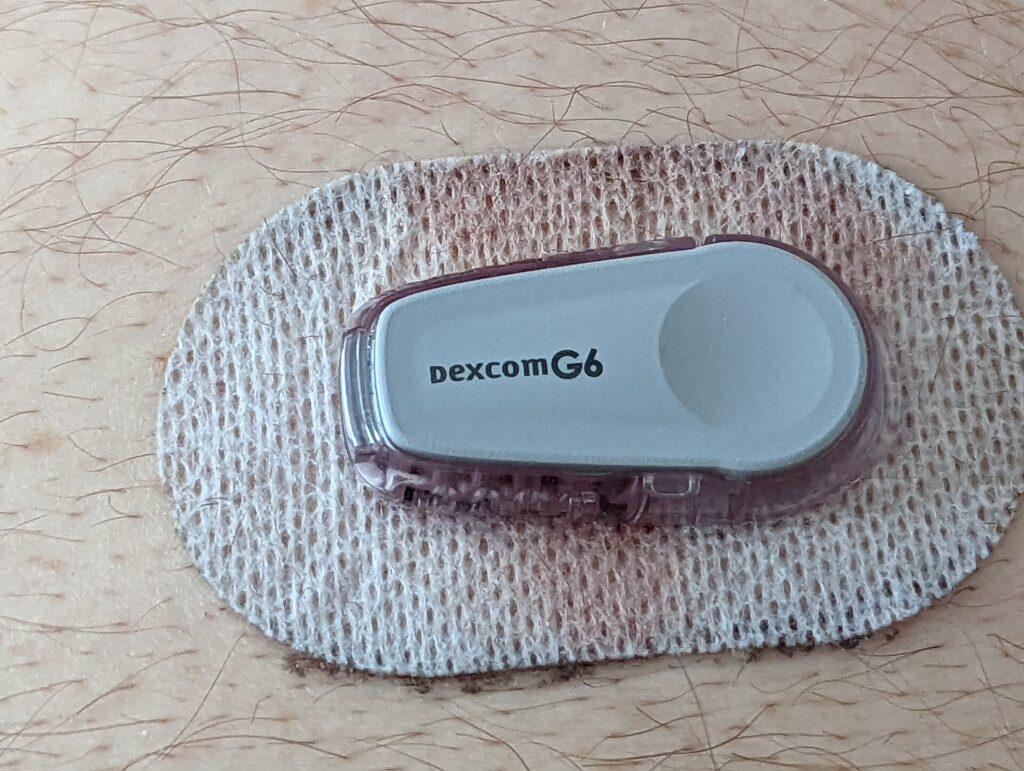
The CAA’s Medical Device Awareness Card tells security officers that people with insulin pumps or CGMs should not be screened by a body scanner. If you opt out, you must be offered an alternative, such as a hand search, which may be done in private. You must never be asked to remove a device from your body. Devices, including spares, shouldn’t go through the X-ray machine. Before you fly:
- Pack insulin, spares and hypo treatments in hand luggage. Diabetes UK warns that the hold can get cold enough to damage insulin, and bags get lost.
- Get a doctor’s letter or a copy of your prescription. You need proof for liquid medicines in containers over 100ml, and it helps with needles and devices.
- Print the CAA card and show it with your letter at security.
- Take spare sensors out of your bag before the X-ray and tell the officer.
- Allow extra time, and check the rules at your return airport abroad, which may differ.
Our guide to flying while disabled covers assistance and what to do if things go wrong.
Free prescriptions
Prescriptions are free in Scotland, Wales and Northern Ireland. In England, where the charge is £9.90 an item, diabetes qualifies for a medical exemption certificate unless it’s treated by diet alone. The certificate covers all your prescriptions, not just diabetes ones. Ask your GP for the form. For applications received from 16 July 2026, certificates usually last 10 years. If you’re 60 or over, prescriptions are already free.
How to challenge discrimination
- Keep a record: dates, what was said, who was there, and any emails.
- Ask for the adjustment in writing and explain how it links to your diabetes.
- If you’re refused, raise a formal grievance (at work) or complaint (anywhere else). Our complaint template helps.
- Get free advice from the Equality Advisory and Support Service on 0808 800 0082 (England, Scotland and Wales), or the Diabetes UK helpline on 0345 123 2399.
- For a work claim, contact Acas (0300 123 1100) for early conciliation first. The deadline is three months less a day, rising to six months less a day for anything that happens on or after 1 October 2026. Claims about shops and services normally have 6 months.
You manage diabetes every hour of every day. Employers, schools and airports can at least stop getting in the way. Get the certificate, get the plan in writing, and when someone says no, ask them which part of the law they’re relying on.



.jpg)
