The short version
Around 633,000 people in the UK live with epilepsy, yet many are still labelled a "health and safety risk" before anyone asks a single question. Here's what the law says about work, driving, free travel, prescriptions, seizure first aid, and being thrown out after a seizure.
An estimated 633,000 people in the UK live with epilepsy, almost 1 in 100 of us, according to Epilepsy Action. Yet people with epilepsy are still turned down for jobs “on health and safety grounds” before anyone has asked a single question. They lose their licence and nobody tells them what that unlocks. Some come round from a seizure to find they’re being shown the door by staff who assumed they were drunk.
A lot of that is unlawful. The law is on your side. Here’s how to use it.
Does epilepsy count as a disability?
Under the Equality Act 2010, you’re disabled if you have an impairment with a substantial (more than minor or trivial) and long-term effect on your ability to do normal day-to-day activities. Epilepsy isn’t on the short list of conditions that count automatically (cancer, HIV and multiple sclerosis). But most people with a diagnosis meet the test, thanks to two rules in Schedule 1 of the Act.
Your medication doesn’t count against you
Employers often get this wrong. The effect of your impairment is judged as if you weren’t taking the medication that controls it. So “your seizures are controlled, so you’re not disabled” is the wrong question. The right one is: what would happen without your anti-seizure medicine?
Seizures that come and go still count
If an effect stops but is likely to recur, the law treats it as continuing. Months between seizures don’t take you outside the Act.
Once you’re covered, you’re protected from direct discrimination, harassment and discrimination arising from disability: being treated badly because of something linked to your epilepsy, like a seizure, time off or post-seizure tiredness. You also have the right to reasonable adjustments. In Northern Ireland, similar protection comes from the Disability Discrimination Act 1995.

Epilepsy at work: disclosure, adjustments and the “safety” excuse
Do you have to tell them?
For most jobs, no. Under section 60 of the Equality Act, an employer must not ask about your health before offering you a job, apart from narrow exceptions such as arranging interview adjustments. Epilepsy Action’s advice is that you don’t have to disclose unless your epilepsy affects safety. But the duty to make adjustments only applies once the employer knows (or reasonably should know), so telling them is often the smart move.
Adjustments that make the difference
- Flexible hours, and no rotating night shifts if lost sleep is a trigger.
- Time off for neurology appointments and medication reviews.
- A quiet space to recover after a seizure, and an agreed plan so colleagues know what to do.
- Home working, or changes to travel if you can’t drive. Access to Work may help with costs.
“Health and safety” isn’t a blank cheque
Employers do have to assess risk. The key word is assess. As Epilepsy Action points out, the law doesn’t allow blanket exclusions without looking at the individual: your seizure type, how often they happen, your triggers and the actual tasks. The armed forces are the main exception, as they’re allowed to exclude disabled people. Elsewhere, a refusal based on a stereotype rather than an assessment is exactly what the Act was written to stop.
A risk assessment asks questions about you. A blanket ban has already decided the answers.
Driving: what the DVLA rules actually say
If you’ve had an epileptic seizure or blackout, GOV.UK is blunt: tell the DVLA and stop driving straight away. You can be fined up to £1,000 for not telling them, and prosecuted if you’re involved in an accident. In Northern Ireland, you tell the DVA. The main car and motorbike (Group 1) rules:
| Your situation | When you can usually reapply |
|---|---|
| Seizures while awake that affect consciousness | After 12 months seizure-free |
| A first, one-off seizure | After 6 months if your doctors judge the risk of another is low; otherwise 12 months |
| Seizures only ever while asleep | Once that pattern is established for 12 months (3 years if you’ve had awake seizures before) |
| Seizures that never affect consciousness or control | Once that pattern is established for 12 months |
| Seizure after your doctor changed or reduced medication | After 6 months back on your previous treatment, if seizure-free |
Surrender it, don’t wait for it to be revoked
You can voluntarily surrender your licence, and it matters. If you surrender, you may be able to drive again as soon as you meet the medical standard, while the DVLA processes your reapplication (under section 88 of the Road Traffic Act 1988, if you meet its conditions). If your licence is revoked, you have to wait for it to come back. Same seizure, very different wait.
Can’t drive? Claim what it unlocks
Losing your licence also opens doors. More detail is in our travel concessions guide.
- Free bus pass. In England and Wales, you qualify if you would be refused a driving licence on medical grounds (other than drink or drugs). Scotland’s pass covers people told not to drive on medical grounds. In Northern Ireland, a licence refused or revoked for at least 12 months can get you a Half Fare SmartPass.
- Disabled Persons Railcard. £20 a year (or £54 for three) gets you and one adult companion a third off rail fares in Great Britain. Epilepsy qualifies with proof of diagnosis plus a copy of your prescription. Being unable to drive on medical grounds is a separate route in. Check the criteria, which are due to widen from late September 2026.
- Free prescriptions. Scotland, Wales and Northern Ireland don’t charge. In England, where the charge is £9.90 an item, epilepsy needing continuous anti-seizure treatment qualifies for a medical exemption certificate. Ask your GP for the form.
Seizure first aid: what everyone should know
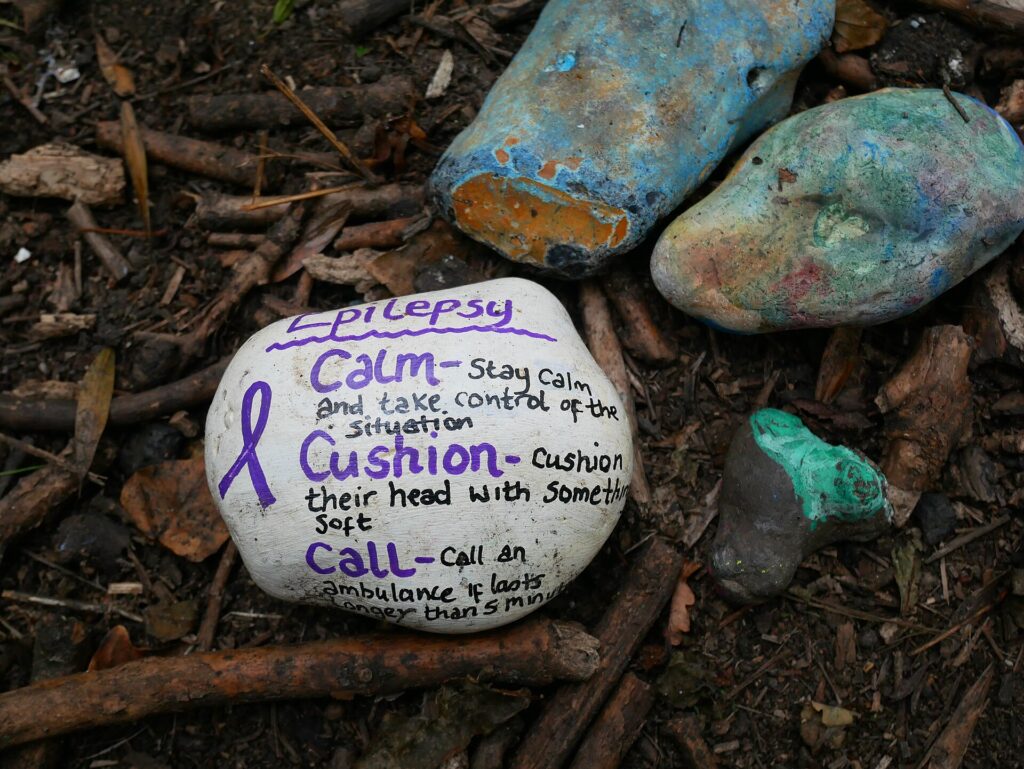
Most seizures stop on their own and don’t need an ambulance. What the person needs is calm and space. From NHS and Epilepsy Action guidance, for a convulsive seizure:
- Stay calm and note the time it started.
- Only move them if they’re in danger. Move hazards away instead.
- Cushion their head and loosen anything tight around their neck.
- Don’t hold them down and never put anything in their mouth, including your fingers.
- When the jerking stops, turn them on their side. Stay and talk calmly until they’ve fully recovered. No food or drink until then.
Call 999 if it’s their first seizure; if it lasts longer than usual for them, or more than 5 minutes if you don’t know; if one seizure follows another without them coming round; or if they’re badly injured or struggling to breathe. If someone seems confused, wandering or fiddling with their clothes, it may be a focal seizure. Gently guide them away from danger and stay with them.
Refused service or thrown out after a seizure: how to challenge it
Post-seizure confusion can look like drunkenness to people who don’t know better. But shops, pubs, transport operators and venues all have duties under section 29 of the Equality Act. Refusing you service, ejecting you or banning you because of a seizure can be discrimination arising from disability unless they can justify it. “We didn’t want a scene” won’t cut it.
- Write it down while it’s fresh: date, time, place, names, witnesses.
- Ask in writing, straight away, for any CCTV to be kept.
- Complain in writing. Name the Equality Act, explain the seizure, and say what you want: an apology, staff training, a lifted ban. Our complaint template helps.
- Get free advice. The Equality Advisory and Support Service is on 0808 800 0082 (England, Scotland and Wales). Epilepsy Action’s helpline is 0808 800 5050.
- Watch the deadline. A claim about goods and services normally has to start within 6 months. For work claims, contact Acas (0300 123 1100) first. The work deadline rises from three months to six for anything that happens on or after 1 October 2026.
If you were abused, mocked or assaulted because of your epilepsy, that may be a disability hate crime. Report it.
Epilepsy is common, and the law usually covers it. Surrender the licence rather than lose it, claim the pass, get the certificate, and put every refusal in writing. Know your rights, then insist on them.



.jpg)
.jpg)