The short version
Steam trains, heather moorland and medieval abbeys don't sound step-free. More of the North York Moors is within reach than you'd think, if you know which stations have steps, which trains need ten days' notice, and where the Changing Places toilets are.
Heather moorland, 1-in-4 hills, medieval abbeys and steam engines older than most of their passengers. On paper, the North York Moors (many people call it the North Yorkshire Moors, after the railway) sounds like everything this site campaigns about: beautiful, historic, and locked to anyone who can’t manage steps.
The reality is better than that, and in places a lot better. There are all-terrain scooters you can hire for a few pounds, walks with no stiles graded by gradient, Changing Places toilets in the middle of the moor, and a heritage railway that rebuilt old carriages so wheelchair users can ride behind a steam engine. But the gaps are real too, and they are specific. A few stations only have steps, and the railway wants ten days’ notice. If you know exactly where those gaps are, you can plan around them.
The most complete practical resource we’ve found is this North Yorkshire Moors accessibility guide. It covers every Tramper hire point, all the Miles without Stiles routes, ten viewpoints you can see from the car, accessible places to stay, and a list of accessible toilets with postcodes. This post is our take: what works, what doesn’t, and what to book before you go.
The steam railway: better than you’d expect
The North Yorkshire Moors Railway runs 24 miles from Pickering through Newton Dale to Levisham, Goathland (Hogsmeade in the first Harry Potter film) and Grosmont. Some trains carry on along the Esk to Whitby. For history, landscape and ways in, see this guide to the North Yorkshire Moors Railway.
What matters here is that the railway has done the work. Its accessible heritage carriages have been adapted with:
- wide double doors and portable ramps, so you don’t have to be lifted up a step into a narrow vestibule;
- space to move on board for a wheelchair or scooter;
- an accessible toilet on the train itself.
Four of the five heritage stations (Pickering, Levisham, Goathland and Grosmont) have step-free or ramped access. There are accessible toilets on the platforms at Pickering, Grosmont and Goathland. Wheelchairs can be borrowed for use on the platforms at Pickering and Whitby, subject to availability, and eligible carers travel free or at a reduced fare.
This matters beyond one day out. Heritage operators love to say “it’s a historic building” or “they’re old carriages” as if that ends the conversation. The Equality Act 2010 doesn’t make an exception for nostalgia: a heritage railway is a service provider like any other, with a duty to make reasonable adjustments. The North Yorkshire Moors Railway shows that decades-old rolling stock can be made to work. Next time a venue tells you its listed staircase is the end of the matter, remember it.
The catches
- You have to book, well ahead. Call the railway on 01751 472508 at least 10 days before you travel to reserve a place in an accessible carriage. On the mainline, Passenger Assist now needs just two hours’ notice. The heritage railway has far fewer accessible spaces, so spontaneous trips are off the table.
- Size limits. Wheelchairs and scooters must be no wider than 700mm, no longer than 1,200mm including footplates, and no heavier than 230kg (36 stone) with the user. Many larger powered chairs and class 3 scooters won’t fit, so measure yours before you book.
- Newtondale Halt is not accessible. It’s a request stop with no road access, reached only by train, on foot or by bike, and it has no step-free route.
- Not every train goes to Whitby. If Whitby is the point of your trip, check which services run through before you book, so you aren’t left at Grosmont.
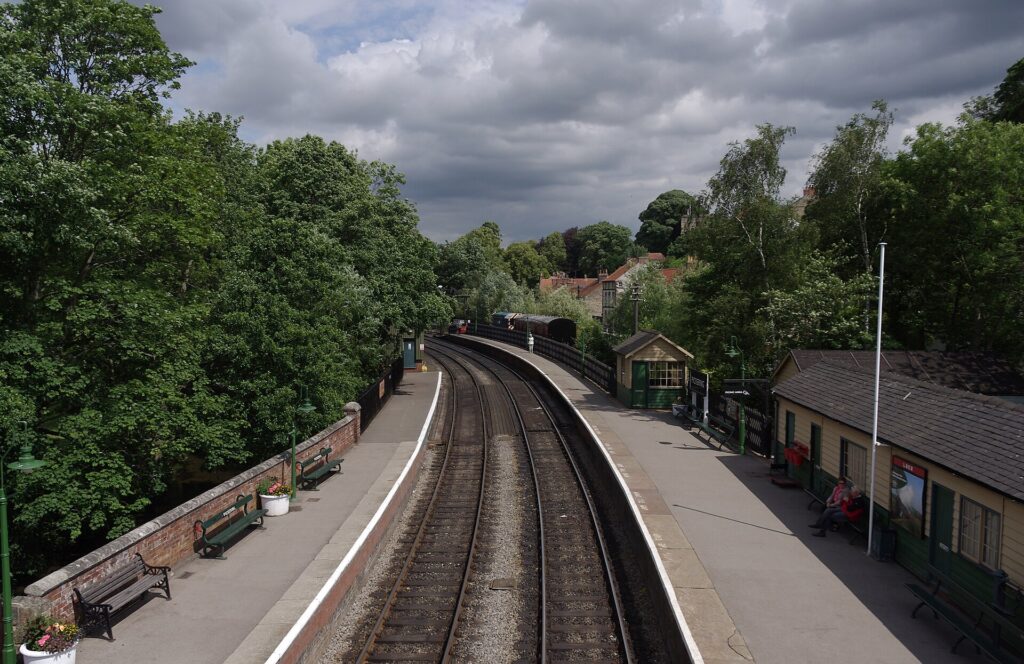
Getting there: the Esk Valley line, station by station
The mainline way into the Moors from the north is Northern’s Esk Valley line, 35 miles from Middlesbrough to Whitby. It meets the steam railway at Grosmont. It’s one of the most beautiful branch lines in England, and most of its stations are unstaffed halts in the middle of fields.
We checked every station on our UK step-free station map. Of the 14 stations from Nunthorpe to Whitby, 7 are fully step-free, 5 are only partly accessible, and 2 have no step-free access at all:
| Station | Our grade | What to know |
|---|---|---|
| Nunthorpe | Partial | Ramped access to the platforms via a level crossing. Unstaffed. |
| Great Ayton | Step-free | Step-free to the only platform. The car park surface is loose shingle. |
| Battersby | Partial | A gated crossing to the platform that National Rail describes as unsuitable for disabled passengers. The approach road is unmade and often muddy. |
| Kildale | Partial | Level access to the single platform, but only graded partly accessible in National Rail’s data. Unstaffed, so check before you travel. |
| Commondale | Not step-free | The platform itself is level, but to reach it you cross a farm paddock on uneven ground. |
| Castleton Moor | Step-free | Level platform. The car park is unmade and overgrown. |
| Danby | Step-free | Level access to the platform, and the station for Danby Lodge. |
| Lealholm | Partial | Step-free, but through a gate that’s hard to manage alone in a wheelchair. |
| Glaisdale | Partial | Level access to the Middlesbrough-bound platform. The Whitby-bound platform is reached by a barrow crossing. The car park is cobbled and uneven. |
| Egton | Not step-free | The single platform is reached only by steps. |
| Grosmont | Step-free | Step-free to the platform, next to the steam railway’s station. Unstaffed. |
| Sleights | Step-free | Step-free to the single platform. |
| Ruswarp | Step-free | Step-free to the single platform. |
| Whitby | Step-free | Both platforms are step-free, and it’s a short, level roll to the harbour. |
Almost every one of these stations is unstaffed. There’s no one on the platform to put a ramp down, so the ramp comes with the train crew. Book Passenger Assist (0800 138 5560 for Northern) even if you usually turn up and go. A booking tells the conductor to expect you, and gives you a record if it goes wrong.
From the south, Malton and Scarborough are both step-free stations with ramps carried on TransPennine Express trains. From Malton, the Coastliner 840 runs to Pickering and across the Moors to Whitby, mostly on low-floor buses with a ramp and a wheelchair space. Our guide to bus ramp refusals covers what to do if the driver won’t deploy it.
Out on the Moors
This is where the North York Moors really shines. Three things stand out:
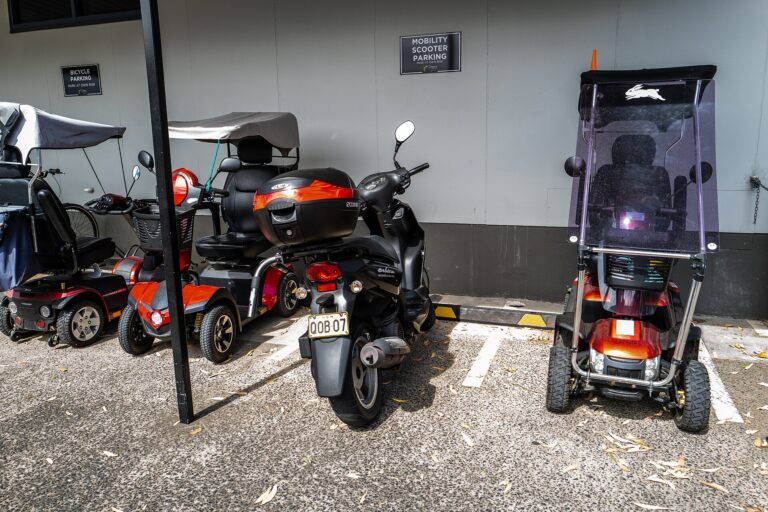
- Tramper hire for a few pounds. Trampers are electric all-terrain scooters that handle mud, grass, cambers and slopes up to 1 in 4. You can hire one at Sutton Bank and Danby Lodge National Park Centres, Dalby, Cropton and Keldy forests, and Scarborough Castle, booked through Outdoor Mobility. You need to be 14 or over, and a companion has to come with you.
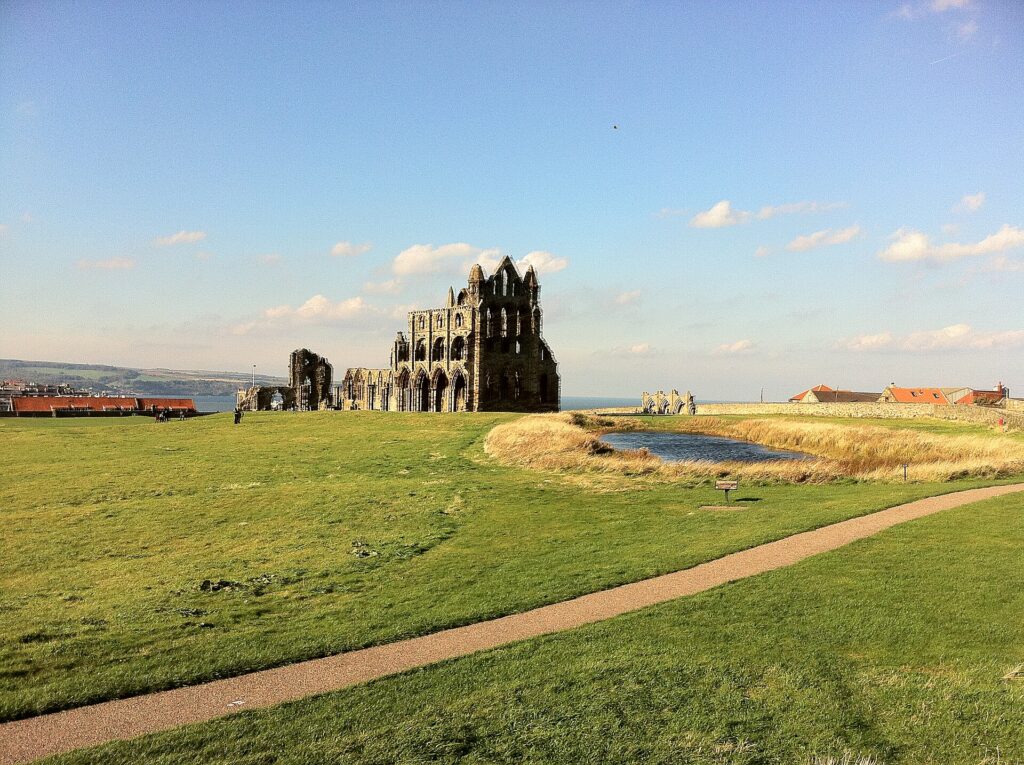
- Miles without Stiles. The National Park grades its stile-free routes by who they suit. For All routes, such as the Whitby Abbey cliff-top path and the Hole of Horcum viewing platform, have a gradient of 1 in 10 or gentler and a firm surface at least a metre wide. For Many and For Some routes get progressively rougher and steeper. It’s the kind of honest grading we wish every countryside site used.
- Changing Places toilets where you actually need them. There are Changing Places toilets at Sutton Bank, Danby Lodge, Dalby Forest and Pickering’s Eastgate car park, as well as at Whitby Leisure Centre and Whitby Marina. You don’t have to cut the day short to drive back to town. Why Changing Places matter.
Most of the accessible toilets in the National Park take a RADAR key. The exception is Grosmont station. If you don’t have a key, you can buy one at Danby Lodge, Sutton Bank or Whitby’s Tourist Information Centre.
Where it still falls short
- Two stations with no step-free access, and more with a catch. Egton is steps only. Commondale means crossing a farm field. Battersby’s crossing is described by the rail industry’s own data as unsuitable for disabled passengers. These are the stations that serve the villages in the middle of the Moors.
- The ten-day rule. We understand why a volunteer-heavy heritage railway needs notice. But it means disabled visitors plan a fortnight ahead for a trip everyone else decides on at breakfast.
- Grass, gravel and weather. Whitby Abbey’s museum is step-free with a lift, but the ruins sit on grass that’s hard going when wet. Rievaulx’s paths are gravel and grass slopes. Plan these for a dry day.
- Unstaffed means unsupported. A step-free platform with nobody around can still leave you stranded if the train crew don’t know you’re there. Booking assistance is the only protection you have.
Plan it in five steps
- Measure your chair or scooter against the railway’s limits: 700mm wide, 1,200mm long, 230kg with you on it.
- Call the railway at least ten days ahead on 01751 472508 to book the accessible carriage, and check which trains run through to Whitby.
- Check your mainline stations on our step-free station map, and book Passenger Assist for the Esk Valley line.
- Book a Tramper if you want to get off the tarmac. Sutton Bank only has two a day, so book early.
- Map your toilets before you leave, and pack a RADAR key.
For the full detail, including Tramper booking times, every Miles without Stiles route, accessible places to stay and all 27 accessible toilets with postcodes, see the accessible visits guide to the North Yorkshire Moors. For the railway’s stations and a picture of the line from Pickering to the sea, read the North Yorkshire Moors Railway guide.
Been recently? Tell us what worked and what didn’t. If a station, venue or train let you down, pin it on the Access Map so the next person knows.