
The short version
The chair is not a convenience — it is mobility itself. Yet NHS wheelchair provision is a postcode lottery of referral criteria, waiting lists and basic models. How the system works, what a personal wheelchair budget can do, and how to fight a refusal.
For the people who use one, a wheelchair is legs, independence and participation — and the difference between the right chair and the wrong one is the difference between a life and a living room. Which makes it remarkable how little anyone is told about how NHS provision actually works.
The route in
- Referral — usually from a GP, physiotherapist or occupational therapist — to your local NHS wheelchair service. You can ask for the referral; you do not have to wait to be offered it.
- Assessment by the service’s therapists: your mobility, posture, pressure risk, home, transfers and daily life. As with every assessment we write about: describe your worst days, your real environment and everything you cannot currently do.
- Provision against eligibility criteria that are set locally — which is why a friend two counties away got a chair your service refused. Criteria, waiting times and models all vary by area; long waits, especially for children’s and powered chairs, are common enough that charities exist to plug the gap.
- The chair remains NHS property, with repairs and maintenance through an approved repairer — keep the repair number where you can find it, and report faults immediately; a failed chair is an emergency, and services have urgent-repair arrangements.
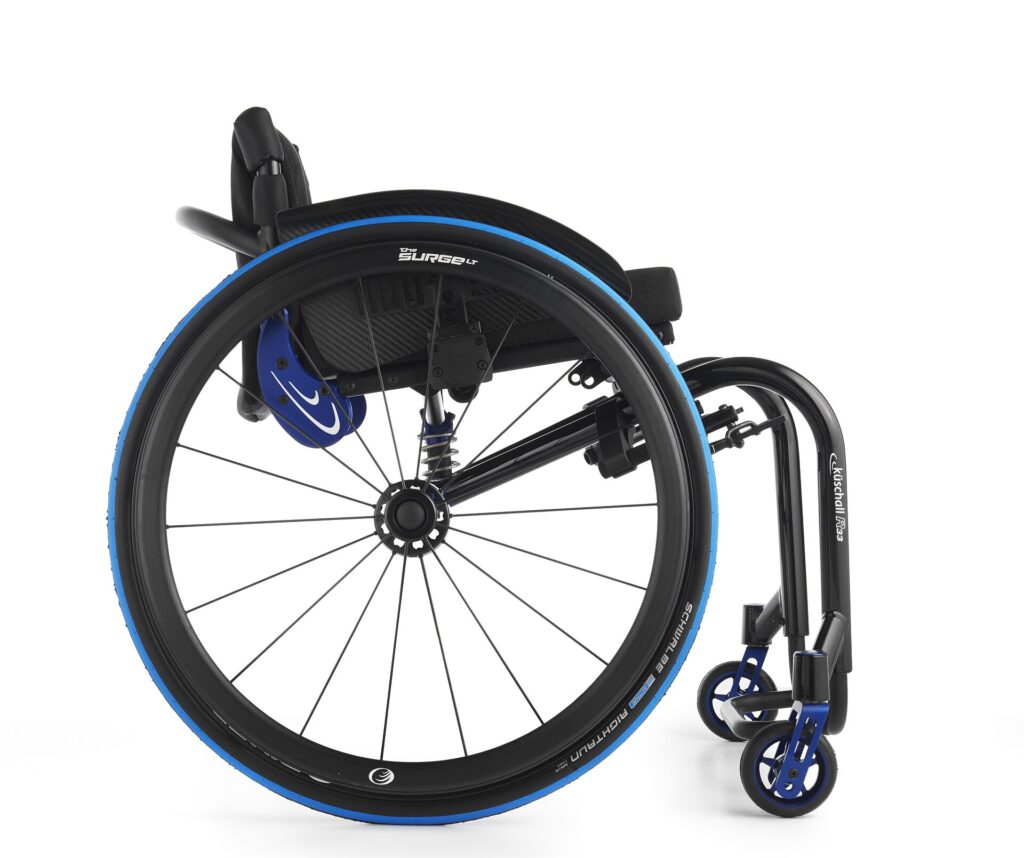
Personal wheelchair budgets: the lever most people don’t pull
If you qualify for a chair, you are entitled to ask for a personal wheelchair budget — a statement of what the NHS would spend on meeting your assessed needs, which you can then use flexibly:
- take the standard NHS chair, or
- put the budget towards a different chair that meets your assessed needs plus your own priorities — lighter, more active, better suited to work or parenting — topping up from your own money, a grant or a charity, or
- in some areas, use it with third-party suppliers entirely.
Ask for the budget figure in writing at assessment. It converts “take it or leave it” into a negotiation — which is exactly why nobody volunteers it.
A basic chair that fits your flat but not your life meets the criteria and fails the person. The budget exists so the extra £800 for the chair you’d actually leave the house in isn’t an all-or-nothing choice.
When the answer is no, or the wait is absurd
- Get the refusal and the criteria in writing. Local criteria must still deliver the NHS’s duties; a criterion that effectively excludes people who can walk indoors but not outdoors, say, is worth challenging on its face.
- Use the NHS complaints route — service, then Integrated Care Board (which commissions wheelchair services), then the Health Service Ombudsman. Cite what the wait or refusal is costing: pressure damage, falls, isolation, a job at risk. See our complaints guide and the NHS access piece.
- Charities fill real gaps: Whizz Kidz for children and young people, condition-specific charities, and local Lions/Rotary-type funds for one-off chairs. A social care needs assessment can also produce equipment the wheelchair service won’t.
- Buying privately? Get independently assessed anyway (posture and pressure mistakes are expensive), insure the chair, and remember VAT relief applies to equipment for disabled people.
And wherever the chair comes from: if an airline, train operator or venue damages it, that is not lost luggage — it is your mobility. Our guides on flying and compensation cover exactly what to do.