
The short version
Combined sight and hearing loss is not deafness plus blindness — it is its own disability, and the law treats it that way: councils must assess deafblind people using someone specifically trained to do it. Most families are never told. Here is what to ask for, by name.
Deafblindness — combined sight and hearing loss — is far more common than most people think: hundreds of thousands of people in the UK live with some degree of dual sensory loss, most of them older people whose sight and hearing have declined together. And it is not deafness plus blindness. A deaf person leans on sight; a blind person leans on hearing. Lose both, even partially, and every workaround collapses at once.
The law recognises this — more specifically than almost anyone realises.
The right most families are never told about
Under the Care Act 2014 and its statutory guidance, when a council assesses a deafblind person’s care needs, the assessment must be carried out by someone with specific training and expertise in deafblindness. Not a generic assessor with a checklist: someone trained to understand dual sensory loss, its communication methods, and the difference between what a deaf specialist and a blind specialist would each miss.
This matters because generic assessments reliably go wrong in the same way: the sight team assesses as though hearing works, the hearing team assesses as though sight works, and the person in the middle is scored as “coping” twice while coping with neither.
- Ask for it by name: “I am asking for a specialist deafblind assessment under the Care Act statutory guidance, carried out by an assessor with specific deafblindness training.”
- Anyone can ask — the person, family, a GP. The duty is triggered by the combination of impairments, not by any registration.
- Registration still helps: councils keep a register of sight-impaired people and identify deafblind people within their records; being known to the system unlocks proactive contact and concessions.
Assessed by the deaf team as a hearing person who can’t see, and by the blind team as a sighted person who can’t hear — and by both as “managing”. That is the failure the specialist assessment duty exists to stop.
The support that assessment should lead to
- Communicator guides — trained workers who support communication, access to information and getting out and about. For many deafblind people this is the single service that reopens the front door.
- Intervenors — intensive one-to-one support for people who are congenitally deafblind.
- Communication methods and training: the deafblind manual alphabet (spelling onto the hand), Block (drawing capital letters on the palm), hands-on or visual-frame BSL, braille and Moon, and technology from screen readers with braille displays to captioned phones.
- Equipment: vibrating and flashing alarms and doorbells, hearing-loop and streamer systems, lighting assessments — much of it via sensory services after that assessment.
- Support can be arranged as direct payments, letting you employ your own communicator guide rather than take whatever is commissioned.
Out in the world
- Identify yourself first to staff anywhere: “I am deafblind — I have some sight/hearing but not reliable. Please face me, speak clearly, and let me take your arm.” People help well once they know how; the red-and-white striped cane, where used, signals dual loss.
- On the railway, Passenger Assist covers guiding, and Turn Up and Go applies. Say “deafblind”, not “visually impaired” — the guiding needs are different.
- Register for emergencySMS (text 999) and get on your energy network’s Priority Services Register — a power cut takes out a deafblind household’s alarms, light and communication in one go.
- The NHS must meet communication needs under the Accessible Information Standard — including booking a deafblind manual interpreter, not just “we’ll speak up”.
- Benefits: dual sensory loss scores across multiple PIP activities — communicating, reading, journeys, safety. Claim it as deafblindness, not as two separate mild losses.
Who to call
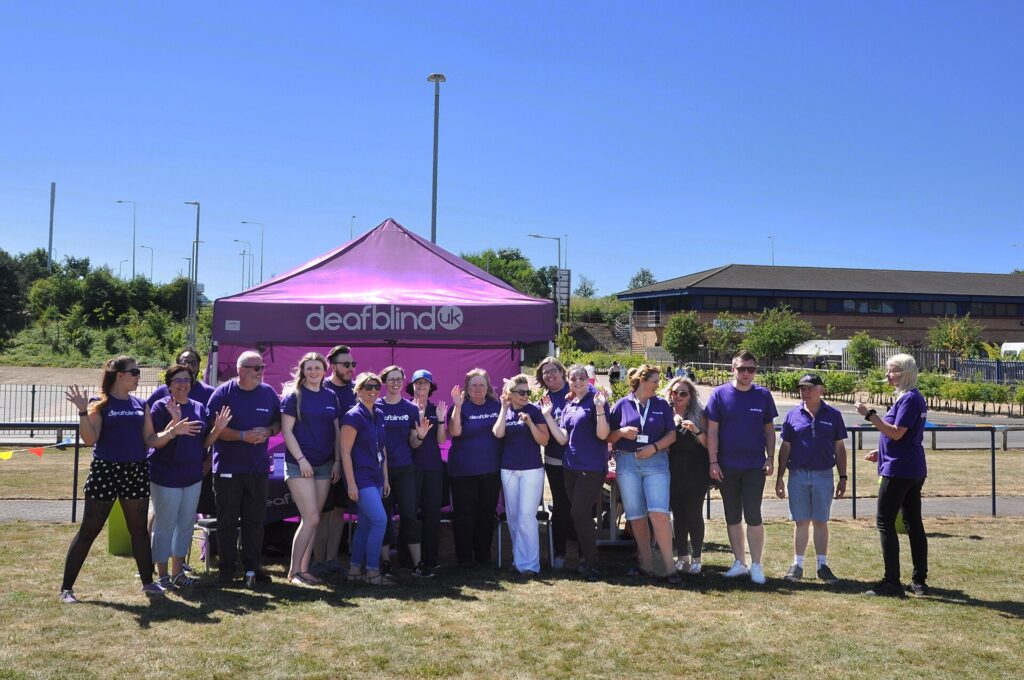
Sense and Deafblind UK are the two national specialists — advice lines, communicator guide services, and help getting councils to honour the assessment duty. If your council insists a generic assessment is fine, both charities have template letters, and the complaints route through to the Local Government Ombudsman applies. An assessment done by the wrong person is not an assessment; it is a queue you stood in twice.


.jpg)