The short version
England is the only UK nation still charging for prescriptions, at £9.90 an item, and the list of conditions that makes you exempt was agreed in 1968. Here's who gets free prescriptions, how to claim a MedEx, and how to avoid a £100 penalty.
If you live in Cardiff, Glasgow or Belfast, your prescriptions are free. In England, it costs £9.90 per item, and that’s the 2026/27 charge, frozen for a second year. England is now the only UK nation that charges. Wales scrapped charges in 2007, Northern Ireland in 2010 and Scotland in 2011.
Whether you pay in England depends on your age, your income and whether you’re pregnant. It also depends on a short list of medical conditions that was drawn up in 1968. If you’re on long-term medication, getting this right is worth hundreds of pounds a year. Getting it wrong can land you with a penalty. Here’s how to make sure you pay only what you legally owe, and not a penny more.
| Nation | Prescription charge 2026/27 |
|---|---|
| England | £9.90 per item, unless exempt |
| Wales | Free (since 2007) |
| Northern Ireland | Free (since 2010) |
| Scotland | Free (since 2011) |
The medical exemption list, in full
If you have one of these conditions, you can get a medical exemption certificate (MedEx). With a MedEx, all your NHS prescriptions are free, not just the ones for that condition. This is the current list from the NHS Business Services Authority (NHSBSA):
- a permanent fistula (for example a caecostomy, colostomy, laryngostomy or ileostomy) that needs continuous surgical dressing or an appliance. That includes most permanent stomas
- a form of hypoadrenalism (for example Addison’s disease) for which specific substitution therapy is essential
- diabetes insipidus and other forms of hypopituitarism
- diabetes mellitus, except where it’s treated by diet alone
- hypoparathyroidism
- myasthenia gravis
- myxoedema (an underactive thyroid that needs thyroid hormone replacement)
- epilepsy that needs continuous anticonvulsive therapy
- a continuing physical disability that means you can’t go out without the help of another person
- cancer: you qualify if you’re having treatment for cancer, the effects of cancer, or the effects of cancer treatment
How long a certificate lasts has changed. For applications received from mid-July 2026, a certificate for the listed conditions now lasts 10 years, up from 5. A certificate based on cancer treatment still lasts 5 years. The NHSBSA sends a reminder about a month before your certificate expires if you’re under 60.
How to apply
- Ask your GP or doctor for form FP92A. Your doctor or another health professional has to complete it. You can’t apply on your own.
- Check it has been sent. The NHSBSA says certificates arrive within 10 working days of it receiving the application.
- Pay while you wait, and ask for an FP57 receipt. Until your certificate arrives, you must pay. Don’t tick the exemption box yet.
- Claim your money back. The certificate is backdated to one month before the NHSBSA received your application. Use your FP57 to claim a refund within 3 months of paying.
- Put the expiry date in your diary. An expired certificate is one of the most common ways people get caught out.
The other ways to get free prescriptions
Many disabled people qualify without a MedEx. In England, prescriptions are free if you are:
- under 16, 16 to 18 and in full-time education, or 60 or over. You don’t need a certificate for these
- pregnant or had a baby in the last 12 months, and have a valid maternity exemption certificate (MatEx). Your doctor, midwife or health visitor can arrange one
- getting Income Support, income-based Jobseeker’s Allowance, income-related Employment and Support Allowance or Pension Credit Guarantee Credit. New Style JSA and ESA don’t count
- getting Universal Credit with take-home pay in your last assessment period of £435 or less. The limit is £935 or less if your award includes a child element or you have limited capability for work
- holding a valid war pension exemption certificate, for prescriptions for your accepted disability
- covered by the NHS Low Income Scheme. An HC2 certificate gives full help, and an HC3 gives partial help. You can’t apply if you (and any partner) have more than £16,000 in savings, investments or property, not counting your home. The limit is £23,250 if you live permanently in a care home
Still paying? Cap it with a prepayment certificate
A prescription prepayment certificate (PPC) covers unlimited items. It costs £32.05 for 3 months or £114.50 for 12 months. You can pay for the 12-month PPC in 10 monthly instalments by Direct Debit. It saves you money if you need more than 3 items in 3 months, or more than 11 items in a year.
There’s also the HRT PPC. It costs £19.80, the price of two items, and lasts 12 months. It covers unlimited prescriptions for certain HRT medicines. It doesn’t cover every HRT product, or any of your other medicines, so check your items are eligible before you buy.
The wrong box: penalty charges and how to challenge them
When you tick a box on the back of a prescription, you’re making a legal claim. The NHSBSA checks those claims afterwards. If it can’t confirm you were entitled, it sends an enquiry letter. If you don’t respond within 28 days, you get a Penalty Charge Notice. That means paying the original charge plus a penalty of five times that amount, up to £100. If you don’t pay or set up a Direct Debit within 28 days, a surcharge of 50% of the penalty is added, up to £50.
The classic traps are an expired MedEx, Universal Credit earnings that went over the limit for one month, and ticking “exempt” while a certificate is still being processed.
- Never ignore the letter. Respond by the deadline printed on it.
- Challenge online using the NHSBSA’s respond to your letter service if you were entitled at the time. For example, you had a valid certificate, a qualifying benefit or a PPC.
- Send your evidence, such as a certificate, a benefit award letter or a Universal Credit statement showing your take-home pay.
- If you weren’t entitled, you can still challenge if you have an exceptional reason and can show you didn’t act wrongfully or with any lack of care. The NHSBSA says it won’t usually accept an expired certificate, or being misadvised by a doctor or pharmacy, as a reason.
- If you can’t pay, contact the NHSBSA to arrange payments before the surcharge is added. If you think you’ve been treated unfairly, our guide to complaining effectively can help.
The 1968 list: why Parkinson’s, MS and cystic fibrosis still pay
According to the House of Commons Library, the medical exemption list was agreed in 1968. The only addition since then has been cancer treatment, in 2009. It reflects the conditions that had long-term, life-saving medication back then, not who needs daily medicine now. Parkinson’s, multiple sclerosis and cystic fibrosis are not on it. Nor are asthma, Crohn’s disease, lupus or HIV. Some people with these conditions qualify under the physical disability criterion or by age. Many don’t. They pay every month for the medicine that keeps them well.
The Cystic Fibrosis Trust has pointed out that when the list was written, most babies born with cystic fibrosis didn’t survive childhood, so they got free prescriptions because of their age. Today there are more adults than children living with CF in the UK, and the list has never caught up.
Nobody chose which conditions to make free in 1968 on the basis of fairness. They chose on the basis of what medicine existed. Medicine moved on. The list didn’t.
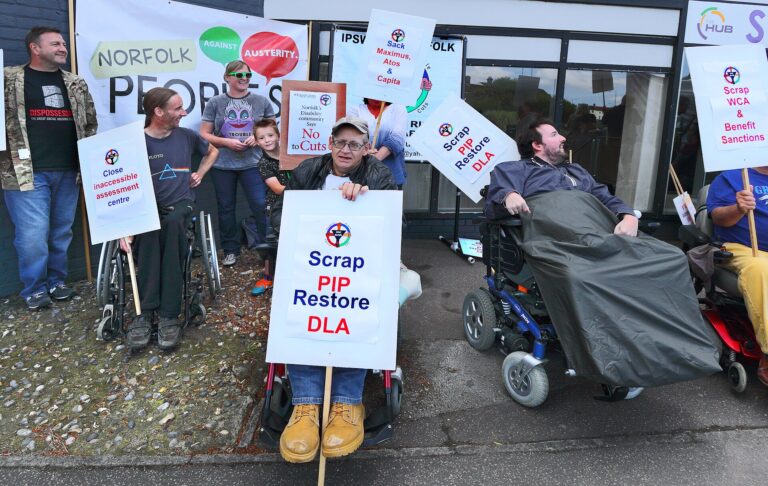
The Prescription Charges Coalition is an alliance of 51 organisations, including Parkinson’s UK, the MS Society, the Cystic Fibrosis Trust and Disability Rights UK. It is campaigning to end charges for everyone with a long-term condition in England. Research with over 4,000 people with long-term conditions, highlighted by Parkinson’s UK, found that charges stop people affording all their medicines. When people skip or ration medication, they get sicker and end up needing more NHS care. The freeze on the charge is welcome, but it isn’t a review of the list.
Here’s what to do next. Check your entitlement today, apply for a MedEx if you qualify, and buy a PPC if you don’t. Then write to your MP and ask one question: when will the government review a list written in 1968? For wider help with healthcare barriers, see our guide to the inaccessible NHS.