The short version
The Blue Badge scheme is more generous than most people realise — including for hidden disabilities. Here's how to apply, what it actually lets you do, and what to do about people parking in bays they shouldn't.
The Blue Badge is one of the few bits of disability provision in Britain that mostly works. It’s also widely misunderstood — by badge holders, by the public, and by the people who park in accessible bays “just for a minute”.
Who can get one
Some people qualify automatically, including those who receive the higher rate mobility component of DLA, or 8 points or more for “moving around” under PIP, and registered blind (severely sight impaired) people.
Others qualify after an assessment of how much walking hurts, exhausts or endangers them. Crucially, since 2019 the scheme in England has explicitly covered hidden disabilities — including people who score 10 points for “planning and following a journey” under PIP, and people whose conditions mean a journey on foot causes very considerable psychological distress or risk of serious harm. Autistic people, people with dementia, and people with severe anxiety are all potentially eligible. Many still assume the badge is only for wheelchair users. It isn’t.
Applying
Apply through GOV.UK, which routes you to your local council. There’s a modest fee in England (councils may charge up to £10; Scotland charges a little more, Wales is free). Badges usually last three years. Have your benefit award letters or medical evidence ready — clear evidence about distance, pain, time and risk is what decides borderline applications, not a diagnosis on its own.
If you’re refused, ask for the reasons in writing and request a review. Councils reconsider more often than people expect, especially when the second application explains the practical reality of a journey rather than listing conditions.
What the badge actually lets you do
- Park in disabled bays on the street.
- In England, park free and without time limit at on-street parking meters and pay-and-display bays in most areas.
- Park on single and double yellow lines for up to three hours (England) where it’s safe and there’s no loading restriction — display the badge and the blue clock.
- The badge belongs to the person, not the car. It travels with you as driver or passenger, in any vehicle.
Two important catches. First, off-street car parks make their own rules — supermarkets, hospitals and private car parks aren’t covered by the on-street concessions, so check the signs. Second, parts of central London are exempt from the national scheme: Westminster, Kensington & Chelsea, the City of London and part of Camden run their own arrangements. And the Congestion Charge discount isn’t automatic — you must register for it in advance.
Misuse — both kinds
Using someone else’s badge (including a relative’s, when they’re not travelling with you) is fraud. Councils prosecute, and the fine can run to £1,000 plus a criminal record. It also does real damage: every misused badge is ammunition for people who think the scheme is rife with cheating.
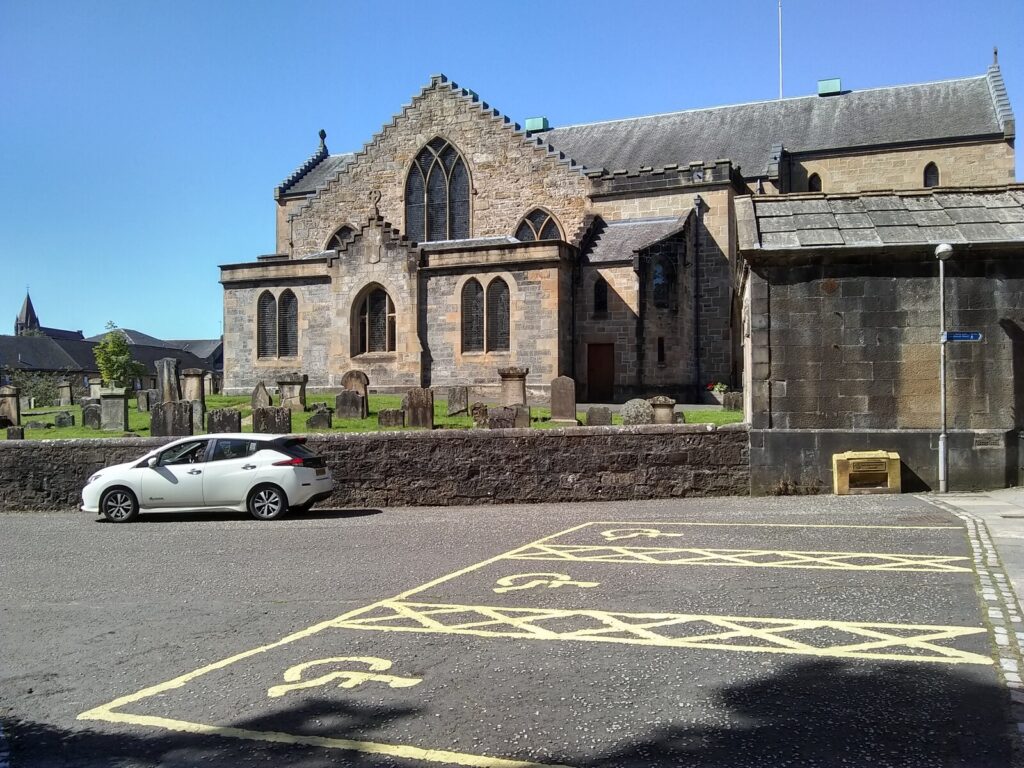
The more common problem is people parking in accessible bays without a badge. On-street bays are usually enforceable by the council — report it to the parking enforcement line while the car is still there. In supermarket and retail car parks, bays are often enforced by the landowner or not at all; complain to the store manager and to head office, because the only thing that changes retail car park enforcement is customers making it a problem for the retailer.
An accessible bay isn’t a convenience space. It’s the difference between doing the shop and going home.
Blocked bays, dropped kerbs and pavement parking are the same fight — see Pavement parking, dropped kerbs and A-boards. If a council won’t act, our complaints guide covers escalating to the Local Government Ombudsman.